Below and at right: Albert Maignan's "Green Muse" (1895) shows a poet succumbing to the green fairy.Edward Rothstein of course writes on art for the
Times.
Today's column is unusual - a seemingly real essayistic venture, and the topic is absinthe. Art that's been made under the influence of absinthe. And the green magic has long been associated with bohemianism and the avant-garde.
There are only two things that recommend this piece in particular.

First, a great line from Oscar Wilde quoted here: "After the first glass, you see things as you wish they were. After the second, you see them as they are not. Finally you see things as they really are, and that is the most horrible thing in the world."
Before we get to the second reason for my interest, let me quote the opening of the piece so you have a sense of its approach:
"Dear reader! Should this column impress you as being more than usually lyrical, recalling perhaps the imagery and elegance of poetry by Baudelaire or Verlaine; should it seem a bit decadent, redolent of Oscar Wilde’s withering hauteur; should it have a touch of madness or perversity, combining, say, the tastes of Toulouse-Lautrec with the passions of van Gogh; should it simply sound direct and forceful and knowing like one of Ernest Hemingway’s characters; should it do any or all of that, let me credit something that each of these figures fervently paid tribute to: the green fairy, the green goddess, the green muse, the glaucous witch, the queen of poisons."Okay, then, second: Rothstein's listy, flowy style itself. It's a bit of a dare, this piece--although just a bit (and that's my point). He admits that "[t]his column was conceived under the influence of a green-colored high-proof herbal liquor that was illegal in the United States for more than 95 years." Note: conceived; not written. Indeed, I wish the piece had actually been written under the influence, or in an unconducive-to-newspaper-sense mood engendered by other means; as it is, though, its waywardness and parallelisms ("the green fairy, the green goddess, the green muse, the glaucous witch, the queen of poisons") are fake drunken-loose writing. Recollection of flow after the fact. The list has green, green, green, glaucous (I like that substitution) and then queen. Green/queen rights the metrical rhyming ship of that otherwise teetering sentence. Too easy. Let it really get off the rails, and then Edward Rothstein would have been doing something new in the
Times Arts page.

The piece set itself up for a fall with its indication of experimentalist standards: for the fact is its writing doesn't "recall[...] the imagery and elegance of poetry by Baudelaire or Verlaine." The opening paragraph is just an irony, even an (unintended) mock at writers who
really go off.
Oh, why can't journalistic writing ever even once really do in its form what it does in content? Why must its excitement always be in the meaning of the sentences' sense and never in itself the means by which the piece is written? I'm asking a silly question, of course, for this is the paper of record....but here (blog) is a space where like others I tilt at stylebook windmills, messing with media of which I truly

 Today I've been listening (downloaded it to my iPod) a two-part symposium on the poetic film that was hosted by the poet and avant-garde film-maker Willard Maas in 1953 at Cinema 16. It's up at UbuWeb here. (Ubu surely has more Maas than any collection.) Ubu hosts a collection of rare audio from the Anthology Film Archives and this is one of them. Arthur Miller and Dylan Thomas are part of the discussion--which is odd because neither seems familiar with avant-garde film, nor particular interested in the topic. For a better view of the Facebook posting/discussion, click on the image above.


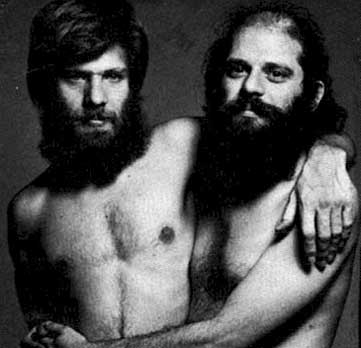


 "I teach horizontally, meaning that while I might begin with a fixed idea of what I'm going to teach that day, I let it drift rhizomatically way off topic, often pulling it back when it gets too far. I rely on non-fixed materials to teach this way; the whole world is at my fingertips. Should I go off on a tangent about John and Rauschenberg and their love relationship as expressed in Rauschenberg's bed, an image of that bed is always a click away. From there, we can head anywhere into the non-fixed universe, be it film, text or sound. And of course, that always takes us elsewhere. As Cage says, 'We are getting nowhere fast.'"

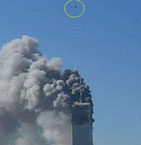 that anyone has yet got the imaginative measure of that terrifying day six years ago. Certainly our Tolstoy has not crawled out of the rubble. The closest we have, Don DeLillo, succeeded as an essayist-journalist ("In the Ruins of the Future: Reflections on Terror and Loss in the Shadow of September,” Harper’s, December 2001) but, to my mind, failed as a novelist ("Falling Man"). One reason, perhaps, is that the remembered emotion was instantly buried under a pile of cultural junk.' - Tod Gitlin in his review of Susan Faludi's The Terror Dream (written for