The site called Mashable / Social Media ran a story a while back with the news of "hotseat," which is being adopted at universities such as Purdue.
 Students at Purdue University are experimenting with a new application developed at the school called Hotseat that integrates Facebook, Twitter, and text messaging to help students “backchannel” during class.
People who have attended technology conferences in the past several years are already familiar with this phenomenon, where social media is leveraged to allow the participants in a session or panel to comment and exchange questions and ideas in real-time. At Purdue, Hotseat is used to allow students to comment on the class as it proceeds, with everyone in the class including the professor able to see the messaging as it happens.
The Hotseat software allows students to use either Facebook, Twitter, Myspace (MySpace), or SMS to post messages during classes, or they can simply log in to the web site to post to and view the ongoing backchannel. Right now it’s only being pilot tested in two courses, but has already become a fast favorite for both teachers and students. Professor Sugato Chakravarty, whose personal finance course is one of the pilot tests, said, “I’m seeing students interact more with the course and ask relevant questions.”
And although it’s been optional for students to participate, so far 73% of the 600 or so in the pilot classes have used the software. We’ve seen Twitter become mandatory for journalism students at Australia (Australia)’s Griffith University to some negative reaction, but this is a less structured implementation which may perhaps account for its more favorable reception.
As Chakravarty goes on to note, though, the application is called “Hotseat” for a reason — and professors will have to be resilient enough to take any potential criticism or even corrections from students in real-time. Nevertheless, he cites it as a “valuable tool for enhancing learning. The students are engaged in the discussions and, for the most part, they are asking relevant questions.”
My first response was extremely negative: just another use of so-called social media to enable universities to continue rostering huge courses (which is obviously a money-saver). I certainly won't celebrate yet another reason why class size will continue to grow and the distance between faculty and student will increase.
But then I realize that the distance I'm thinking of is physical. Programs like Hotseat will tend to make the lecture impossible to maintain, if (for instance) students are not understanding the material, if they have questions they feel the need to pose but can't otherwise break into the competent super-confident flow of a lecture. So this might shake up some lecturers a bit, might cause them to revise their yellowed lecture notes, and to look up at the tweetflow on the monitor behind them.
 Well, then, back to skepticism. Do we really need students' tweets projected in the front of the classroom? Can't we all learn, even in large classes, to ask questions, encourage students to speak, lead a real discussion? If a Hotseat-enabled tweet from the otherwise reticent student in row 26 then makes possible an interaction "outside" the social media--if this system becomes a prompt--then I'm fine with it. If it's just another excuse for pedagogical impersonality (not to mention I know/you don't antagonism between teacher and learners), then I'll sit this one out.
I'll just repeat what I've written in this blog any number of times. My pedagogy is saturated with uses of digital media and IT (I'm downright gaga about it all), but my classroom itself--the space for our meetings--is for the most part pre-tech: the students and I in the space. Not always, but often, my classroom is the only tech-free experience my students and I will have all day.
- - -
Click here for more on the end of the lecture.


 "I teach horizontally, meaning that while I might begin with a fixed idea of what I'm going to teach that day, I let it drift rhizomatically way off topic, often pulling it back when it gets too far. I rely on non-fixed materials to teach this way; the whole world is at my fingertips. Should I go off on a tangent about John and Rauschenberg and their love relationship as expressed in Rauschenberg's bed, an image of that bed is always a click away. From there, we can head anywhere into the non-fixed universe, be it film, text or sound. And of course, that always takes us elsewhere. As Cage says, 'We are getting nowhere fast.'"

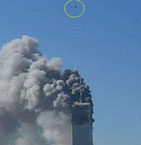 that anyone has yet got the imaginative measure of that terrifying day six years ago. Certainly our Tolstoy has not crawled out of the rubble. The closest we have, Don DeLillo, succeeded as an essayist-journalist ("In the Ruins of the Future: Reflections on Terror and Loss in the Shadow of September,” Harper’s, December 2001) but, to my mind, failed as a novelist ("Falling Man"). One reason, perhaps, is that the remembered emotion was instantly buried under a pile of cultural junk.' - Tod Gitlin in his review of Susan Faludi's The Terror Dream (written for