More...
Showing posts with label collage. Show all posts
Showing posts with label collage. Show all posts
Monday, January 04, 2010
Thursday, December 31, 2009
trippy west-coast surrealism in Chelsea
 Walked up to Chelsea the other day to take a look at the Wallace Berman show at Nicole Klagsbrun Gallery. Wonderful stuff. Most of the pieces date from 1962 or so to the late 60s, but there is one item dating from 1960 and several from the 70s. Berman edited the great Semina magazine, which published irregularly from the mid-50s through 1964; I've written about Semina, happily. Others have too. The gallery shows Berman's silent film Aleph. The day I was there (the gallery was technically closed) I didn't get to view it, but of course I knew to look at Ubuweb films, and, sure enough, there it was. The show closes January 9th, so get to 26th Street before it's too late.


Monday, March 24, 2008
poem as news, news as poem
 I've had a lot to say - too much, for most people, I'm sure - about the cardboard caricaturing of American communist poets, an invention of the 1940s and 1950s after the apparent/alleged dominance of such poets in the 1930s. I don't mean their politics, which often can be aptly caricatured (or at least predicted); I mean their aesthetics.
 To take an instance: Collage, one would think, would be anathema to a communist poet at the height of the anti-fascist movement.
Responding to the death of Franklin Roosevelt in the spring of 1945, the communist Aaron Kramer constructed an elegy of words he found in the New York newspapers of April 13th and 14th. The result is a poem that is most certainly not an effort to respond coherently to a major political event - maybe emotionally, but not ideologically. It's not, in my view, a great instance of collage, but it is a newspaper collage and it was published in the American communists' official newspaper. The whole text is available in my modern American poetry site/English 88. Here are a few parts:
QUESTION: What did President Roosevelt mean to you
personally?
Place: Times Square...
A black crepe bowknot
either with or without streamers...
They came up out of the subways to put the question...
the flag is flown at half-staff, it was pointed out,
but never with the blue field down,
as that signifies a signal of distress...
Subscribe to:
Posts (Atom)


 "I teach horizontally, meaning that while I might begin with a fixed idea of what I'm going to teach that day, I let it drift rhizomatically way off topic, often pulling it back when it gets too far. I rely on non-fixed materials to teach this way; the whole world is at my fingertips. Should I go off on a tangent about John and Rauschenberg and their love relationship as expressed in Rauschenberg's bed, an image of that bed is always a click away. From there, we can head anywhere into the non-fixed universe, be it film, text or sound. And of course, that always takes us elsewhere. As Cage says, 'We are getting nowhere fast.'"

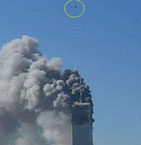 that anyone has yet got the imaginative measure of that terrifying day six years ago. Certainly our Tolstoy has not crawled out of the rubble. The closest we have, Don DeLillo, succeeded as an essayist-journalist ("In the Ruins of the Future: Reflections on Terror and Loss in the Shadow of September,” Harper’s, December 2001) but, to my mind, failed as a novelist ("Falling Man"). One reason, perhaps, is that the remembered emotion was instantly buried under a pile of cultural junk.' - Tod Gitlin in his review of Susan Faludi's The Terror Dream (written for