Here are a few seconds of babble flow from "Howl" (from the 1959 Big Table recording).
 PennSound's Maggie O'Sullivan page includes a recording of a discussion with Penn students in Charles Bernstein's "studio 111" seminar. Michael Nardone has transcribed the session now and here is a portion:

 The newest event in the EDIT series, created by Danny Snelson for the Writers House, will feature Adachi Tomomi and Tianna Kennedy on February 18. EDIT is a roving events series pairing innovative performances with focused critical responses toward an exploration of editorial strategies in contemporary writing and the arts. For more, listen to this announcement. In the photo: Tiana Kennedy.
 I just received a copy of English Studies in Canada volume 33, issue 4. (It's dated December 2007 and so I assume it's been delayed.) This is a special issue edited by Louis Cabri and Peter Quartermain, with a "digital sound editor" - namely PennSound's own Mike Hennessey. The issue is titled "On Discreteness: Event and Sound in Poetry." The table of contents is tantalizing, including: Bob Perelman on listening to WCW's "The Sea-Elephant," Brook Houglum on Kenneth Rexroth and radio reading, Brian Reed on Gertrude Stein speaking, Sarah Parry on the "LP era" in poetry, and Geoffrey Hlibchuk on the relationship between shortwave number stations and 20th-century poetry. Can't wait to read this stuff! And listen: comes with a CD of recordings edited by Hennessey.
 The forthcoming spring '09 issue of The Wallace Stevens Journal collects articles written about Stevens and the sound of poetry. I have a piece here, based on a talk I gave at MLA a few Decembers ago. The papers and other contributions have been expertly edited by Natalie Gerber.
 A new publication, Cover without a Record, was created by students and faculty who were part of a second-time experimental seminar co-sponsored by the Center for Programs in Contemporary Writing (CPCW) and the Institute of Contemporary Art (ICA) here at Penn.
 At the recent gathering on conceptual poetry in Tucson, Tracie Morris performed a piece based on a single sentence she heard spoken in a stentorian, didactic-pedagogical "Afro-Shakespearean voice" - "It all started when we were brought here as slaves from Africa." She creates a sound poem of the line in her unique way of singing-uttering. You can watch a video of the whole reading at which this piece is the final performance. Better yet, listen to the audio-only mp3 I created from the video, which is now linked to Tracie Morris's PennSound page.
 We've released PoemTalk #6, featuring Kenny Goldsmith, Tracie Morris and Joshua Schuster talking with me about Jaap Blonk's performance of a titular line from Madeline Gins. For more, go to the PoemTalk blog.
 Cecilia Vicuña at the Writers House on April 15. Cecilia was our first "Writers without Borders" featured visitor. She chanted and recited for 40 minutes (and 8 seconds)--and that recording is now available on her PennSound page. The Writers House web calendar entry introduces her as follows: "Cecilia Vicuña, acclaimed Chilean poet, filmmaker and performance artist weaves time, space and sound to evoke ancient sensory memories. Through playful improvisations, stories and chants she leads her audience into a communal space where poetry unfolds. In her work indigenous word-play interfaces the contemporary realities of ecological disaster. Cecilia Vicuña is the author of sixteen poetry books published in Europe, Latin America and the US. Born and raised in Santiago de Chile, she has been an exile since the Pinochet coup in the early 1970s, and since 1980 has resided in New York, spending several months a year in Latin America. Currently she is co-editing the Oxford Book of Latin American Poetry, forthcoming 2008."
 The Wallace Stevens relevant to contemporary poets (and here I am going to take extreme examples from among writers never thought of as deriving from the Stevensean aesthetic) such as Kenneth Goldsmith or Tan Lin, both of whom often operate in ambient language — words arranged as to be analogous to sound already in the environment—is the Stevens who strives at times to “undo the traditional work of polyphonic harmony” and makes “moves toward a monotony, a dead unison.” This is the little-appreciated Stevens who responds with beautiful uncreativity to Wittgenstein’s assertion that “A tune is a kind of tautology, . . . complete in itself.” The Stevens whose words are sometimes a “semiotically dirty, mumbled smattering over the possibility of” a vowel, such as “O.”
 Ah, but the phrases quoted in the previous two sentences were not from Goldsmith or Lin, but from an essay by, of all poets, John Hollander. One of the keenest early pieces on sound in Stevens was indeed authored by Hollander, a writer of sonorous, formally lyric lines, very nearly an anti-modernist (although Joyce was his earliest influence), generally associated with traditional poetics — a poet not at all in the Pound-Williams-objectivist nexus. (Hollander is often said by mainstream critics to be writing in the Stevensean tradition, but it is the supposed Auden side of that mode. ) Many young scholars of modern and contemporary poetry were trying to resist the “Whose Era Is it? – Stevens or Pound” dichotomy even before Marjorie Perloff stated the case for this key literary-historical binarism thus in 1982. Taking up Hollander’s cause seemed to cede the languagy ground to Pound and made sound-in-Stevens criticism unfashionable at best, irrelevant at worst. In 1981, as my handwritten notes on a photocopy of “The Sound of the Music of Music and Sound” indicate, before even reading it closely I filed away the Hollander piece and conducted my own research and writing on Stevens (for a book that made a political reading of a politically unconscious modernist) without the benefit of its insights. Yet there it was, critically incorrect, yet a large and fundamental—and super-obvious—claim: “The whole of ‘The Whole of Harmonium’ [Stevens’ term for his overall poetic project, the continuous poetic] is a musical trope.” I once published a 13-page interpretation of “Sad Strains of a Gay Waltz” and “Mozart, 1935,” describing a counter-politics against the lyric made in verse using music as a trope, without consulting this essay. That a critic like Hollander works as a poet at the Frostean end of the spectrum of Stevensean phrasing (and sense of nature) kept me from hearing the fitness of the critic’s sense that sounds apparently external to the poet, such as be-thouing Romantic bird, were “asserting their own exemplariness” through words as auralities. Missing the musical forest for the literary-political trees, lured down a single path formed by straight and narrow rather than crisscrossed aesthetic taxonomies, hearing talk of sound but seeing metrical traditionalism, I overlooked the clear assertion that “Frost and Stevens would make very different things of th[e] observation” offered by George Santayana that “To hear is almost to understand."
 Paal Bjelke Andersen this past summer organized a poetry/poetics festival associated with nypoesi. Paal wanted to feature various projects in digital poetry, sound poetry and digital archiving - and asked that PennSound be represented in the catalogue or proceedings. I wrote a piece which was translated into Norwegian. Here you can get a sense of the contributors. In January the nypoesi people will put up a sound archive of Scandinavian poets reading their work, using PennSound as a model. Eventually both sound files and many of the essays will be published and presented in a book/CD set. Here is a link to the essay in English.
 When the weather starts to get a bit nasty, and just going out for a stroll in nature seems the last thing I'd want to do, I make "Let's Go Out" as recited by Jaap Blonk my poem of the day. Oh, let's go out, let's go out. Let's go out into nature, nature, nature, the natural word along with natural language, the most natural language there is....
 Not quite a year ago I gave a short paper on sound in Wallace Stevens, at a session that was part of the cluster of sessions on the conference-wide theme, "the sound of poetry," at the Modern Language Association's huge annual gathering. I opened with this simple assertion:
 Here the homicide victim was “The Man with the Blue Guitar.” The question Simons posed about unreality in canto XVIII might well have led Stevens to discuss how the sound of the “Sea of Ex” negates the negation of intelligible language in the poem. The canto is a dream of the sort that defies the term “dream” (“to call it a dream” is the best we can do). And the rest is repetition, words crossing the senses (the guitarist’s “long strumming on certain nights / Gives the touch of the senses, not of the hand”) such that the thing, the idea of the thing in the phrase “things are they are,” is lost in the ringing of repeated, modulated phrasing: “A dream no longer a dream, a thing, / Of things as they are, as the blue guitar” etc. Thus “Ex” marks a poetic spot beyond sounded sense-making, a place toward which the poem’s language drifts. Yet, especially if we’ve read Simons’ letter (now housed at the Huntington Library), we can sense in Stevens’ reply to Simons that he knew he needed first to help his correspondent make basic sense of the exclusive visual scene, so that the “sense of irreality often in the presence of morning light on cliffs when they rise from the sea” engages image by analogy as a didactic tool. Impressionism here is an analogy to irreality, not a theme of the poem, nor its aesthetic ideology or mode. The canto uses the sound of words to stipulate irreality too, yet the brief explanation, published in Letters without, of course, the incoming letter from Simons, nor the context of the imbalanced power relationship, seems definitive. There are at least a dozen similar readings. The same confusion, for instance, seems to derive from Stevens’ answers to Simons’ queries about the Arabian in the room in canto III of the “It Must Be Abstract” section of Notes toward a Supreme Fiction. In the margin of Simons’ incoming letter, next to the question as posed, Stevens wrote in pencil: “The Arabian in the room & the unscrawled fores (the vagueness – undecipherable) – is the moonlight” (letter to Simons). He was hardly avoiding the centrality of the “chant” and of the “damned hoobla-hoobla-hoobla-how” here; rather, he was literally responding to what he thought Simons needed to get along section by section in the epic.
 The work presented here comprises a portion of the Sackner's tremendous compendium of sonic works. The range of geographic origins runs the circumference of the globe. The time span is nearly a century. It witnesses histories: of poetry, literature, music, visual art, technology, politics, religion, theoretical contentions and practical abstention. It indicates and permits divergent lines of flight. It is an ensemble of dramatic personalities and the social narratives that they informed. It chronicles and enacts the persistent deformation and reformation of the flow of language, intending the same towards the order of things in the world.
 I recommend J. Henry Chunko's October 6th John Cage wrap-up, which begins with his apt admiration for Cage's 1977 performance of Empty Words. He calls it "this jaw droppingly incredible recording." (He's pointing to this.) And then he just enthuses across other links and references. Along the way he mentions my Cage stuff in English 88.
 If it's true, as Bob Cobbing put it in 1969, that "Sound poetry dances, tastes, has shape," then those of us who have been teaching poetry-as-printed (poetry on the page, unsounded poetry, what have you...) would presumably have to add at least these three dimensions to the realms of approach in the classroom. Which is perhaps too elaborate a way of saying that to have been prepared to teach words on a page, no matter how complex, is not to be prepared to help present a language as a kind of dance, as something to be tasted, as something that has a physical shape.
 I've been thinking about how we can learn to understand poetry and poetics through sound, as distinct from - or in addition to - the text versions of the poem. Not a new topic, but I want to keep myself to basics. I want to start again in thinking about this. Build the story a piece (or measure) at a time.


 "I teach horizontally, meaning that while I might begin with a fixed idea of what I'm going to teach that day, I let it drift rhizomatically way off topic, often pulling it back when it gets too far. I rely on non-fixed materials to teach this way; the whole world is at my fingertips. Should I go off on a tangent about John and Rauschenberg and their love relationship as expressed in Rauschenberg's bed, an image of that bed is always a click away. From there, we can head anywhere into the non-fixed universe, be it film, text or sound. And of course, that always takes us elsewhere. As Cage says, 'We are getting nowhere fast.'" MORE...

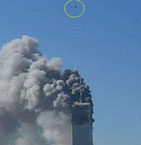 that anyone has yet got the imaginative measure of that terrifying day six years ago. Certainly our Tolstoy has not crawled out of the rubble. The closest we have, Don DeLillo, succeeded as an essayist-journalist ("In the Ruins of the Future: Reflections on Terror and Loss in the Shadow of September,” Harper’s, December 2001) but, to my mind, failed as a novelist ("Falling Man"). One reason, perhaps, is that the remembered emotion was instantly buried under a pile of cultural junk.' - Tod Gitlin in his review of Susan Faludi's The Terror Dream (written for Truthdig.com). MORE...