From an interview with Gene Tanta: "Dada interests me more than Surrealism. However, within Surrealism, its anarchic tendencies seem more interesting to me than its fetishistic tendencies (which American marketing has employed with such gusto). For instance, Breton had another concept called “convulsive beauty” which transgresses the boundaries of formal logic as well as the canonical categories of Beauty. Convulsive beauty, by retooling the pathology of hysteria, queers aesthetic and political norms." For more, click here.
Showing posts with label surrealism. Show all posts
Showing posts with label surrealism. Show all posts
Saturday, March 12, 2011
surrealism's anarchic tendencies
From an interview with Gene Tanta: "Dada interests me more than Surrealism. However, within Surrealism, its anarchic tendencies seem more interesting to me than its fetishistic tendencies (which American marketing has employed with such gusto). For instance, Breton had another concept called “convulsive beauty” which transgresses the boundaries of formal logic as well as the canonical categories of Beauty. Convulsive beauty, by retooling the pathology of hysteria, queers aesthetic and political norms." For more, click here.


Thursday, December 31, 2009
trippy west-coast surrealism in Chelsea
 Walked up to Chelsea the other day to take a look at the Wallace Berman show at Nicole Klagsbrun Gallery. Wonderful stuff. Most of the pieces date from 1962 or so to the late 60s, but there is one item dating from 1960 and several from the 70s. Berman edited the great Semina magazine, which published irregularly from the mid-50s through 1964; I've written about Semina, happily. Others have too. The gallery shows Berman's silent film Aleph. The day I was there (the gallery was technically closed) I didn't get to view it, but of course I knew to look at Ubuweb films, and, sure enough, there it was. The show closes January 9th, so get to 26th Street before it's too late.
Sunday, December 13, 2009

Sunday, January 04, 2009
two favorite characters
The Times City Room has a blog and the January 2 entry was a piece about the recent donation of the books and papers of the famed bookstore, the Gotham Book Mart, to the special collections department of Penn's Van Pelt Library. Actually, a donor paid the bookstore a sum for its contents, whereupon the donor anonymously donated them to Penn. Penn announced this major acquisition back in mid-December, but now the City Room blog takes a broader look at this once-important literary watering hole and the context of its demise. And they run a great photo of some denizens, including writers who have long interested me, such as Horace Gregory and his wife Marya Zaturenska. Below is that photo. Here I want to point out two characters I find especially fascinating. One is Jose Garcia Villa, a Flipino-American poet who did some writing but also some editing in the modernist milieu. Some time ago I had something to say about his experiment with poems in which all words were separated by commas; see "why,can't,traditional,meter,be,an,effect,too?" Garcia Villa is the slight dark-haired fellow standing under the man on the ladder (who happens to be W. H. Auden). Another favorite of mine is the fellow sitting cross-legged on the floor: Charles Henri Ford, a novelist, poet, editor, photographer, collage artist and driving force behind the surrealist magazine View. He was born in Mississippi and I'm guessing he picked up the handle "Henri" in Paris. He had escaped to France pretty early, and ran his first periodical there, titled Blues and subtitled "A Bisexual Bimonthly." Returned to NYC in '34 and lived there with his long-time partner, the quasi-exiled neo-romantic painter Pavel Tchelitchew. My favorite Ford story: he typed Djuna Barnes' novel Nightwood for her, while visiting Morocco in 1932 at the suggestion of Paul Bowles.


Thursday, July 17, 2008
this is the end
 Who is it that put Arthur Rimbaud and Jim Morrison together in a book? It will probably surprise you to know that its author took his academic degrees in the early 1930s. He was Wallace Fowlie, a serious popularizer of surrealism. For much more about Fowlie, take a look at my 1960 blog.
By the way, as many people know, The Doors took their name from an Aldous Huxley book called The Doors of Perception and that Huxley had taken his title from a line in William Blake's "The Marriage of Heaven and Hell": "If the doors of perception were cleansed, every thing would appear to man as it is: infinite."
Tuesday, February 05, 2008
Buster Crabbe & John Glenn are the same person
 I'm taken by what's been called "pop surrealism." This is recent (post-2000), mostly southern-California and Detroit-area stuff, but its visual basis seems often to combine 1950s-era kitsch advertisement and space-race era forms, modernist design (and coloring), 1960s TV characters, and skeletal or monstrous deformations and grotesques (cute kittens in a basket, but they have three eyes; a monkey with a clown head carrying a trophy and a dented Arthurian sword across a Hudson School landscape).
 There's Charles Kraft's carefully made porcelain figure, with hand-painted underglaze: a rabbit with a dagger stuck in its back, 12" tall - called Sal Mineo Bunny (2000).
Larry Reid's essay on pop surrealism says it combines "mid-century dementia" with "bad-ass low brow." He observes about the 1950s what has been said many times before: "Beneath the thin crust of conformity that characterized mid-century America lay a bubbling caldron of weirdness." Well now, in the first decade of the 21st century, mostly young painters have founded an underground art that looks back at the 50s as non-witnesses who see, or try to see, only the surface (and not the psychological or political depth) of that weirdness - who see the 50s through the pop culture of the 60s and don't show any loyalty to the experience of either.
It's a steady diet of drive-in monster movies, Rat Pack playboys, prehistoric fantasy Flinestones immediately following the futurism of the Jetsons, cathode characters, the anti-Comics hysteria, the mayhem of a 1960-era Los Angeles hot-rod emporium - all combined and gone awry.
 Tim Biskup's The Demon Painter (2001 - above) is not actually typical of the group, given what I've said above. Yet then again, it is - in a more specifically painterly way. It nods toward the figure-drawing end of the depictive spectrum modernist Paul Klee painted, pushing it toward cartoonishness, adding a little beatnik straggliness, and creates a dark yet comic vision of the artist's position. I've inserted a few figures
  from Klee here for comparison, "Dancing Girl" and "The Drummer Boy" (both from the
 Chicago Institute).
Isabel Samaras (like Biskup, she's from L.A.) does oil on wood - more straightforward remakings of 60s TV. Batman and Robin sharing a French kiss in Secrets of the Batcave part 2 (2002). A Madonna and Child panel in medieval style - except that they are Hollywood-kitch chimps from Planet of the Apes (Behold My Heart of 2003). Then there's the Botticellian Birth of Ginger of 2002 (below). (It takes off, of course, from the 60s TV show, Gilligan's Island, which is a child, in a way, of the boob-tube version of the Beat revolution, via the Maynard G. Krebs-Gilligan equation.)
Robert Williams, one of the artists included in Pop Surrealism, ed. Kirsten Anderson (Ignition Publishing/Last Gasp, 2004), embraces the category "low brow art," offers topsy-turvey phrases such as "dumbing down to DaVinci," describes his California aesthetic origins in comic book art, carnival-show banners from the 1880s through the 1950s, music posters, hot rod and biker art, pin-up art, graffiti and beach-bum graphics and believes that, visually and more generally culturally speaking, Buster Crabbe as Buck Rogers and John Glenn are the same person.

Subscribe to:
Posts (Atom)


 "I teach horizontally, meaning that while I might begin with a fixed idea of what I'm going to teach that day, I let it drift rhizomatically way off topic, often pulling it back when it gets too far. I rely on non-fixed materials to teach this way; the whole world is at my fingertips. Should I go off on a tangent about John and Rauschenberg and their love relationship as expressed in Rauschenberg's bed, an image of that bed is always a click away. From there, we can head anywhere into the non-fixed universe, be it film, text or sound. And of course, that always takes us elsewhere. As Cage says, 'We are getting nowhere fast.'"

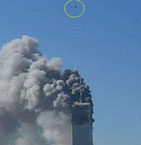 that anyone has yet got the imaginative measure of that terrifying day six years ago. Certainly our Tolstoy has not crawled out of the rubble. The closest we have, Don DeLillo, succeeded as an essayist-journalist ("In the Ruins of the Future: Reflections on Terror and Loss in the Shadow of September,” Harper’s, December 2001) but, to my mind, failed as a novelist ("Falling Man"). One reason, perhaps, is that the remembered emotion was instantly buried under a pile of cultural junk.' - Tod Gitlin in his review of Susan Faludi's The Terror Dream (written for