I drank milk, and I ate honey-comb.
Now I'm eating goof balls, drinking rum and gall,
wine, and gin, and vodka, and wood alcohol.
Give me ten Tequilas, a jigger full of stout,
And a little lap of Pepsi before I freak out
In the reeling Jericho Bar.
That's Helen Adam and her astonishingly asocial couplets (and an unrhymed line at the end). Note my inclination to compare her to the Baroness Elsa von Freytag Loringhoven. And notice, too, that it's the bar that's reeling, no her. Nor us, lured - and in my case, charmed - by the regularity of the line.
 I'll add that the move from the sad-pious (or perhaps mock-pious) address to "Mother" (cap M) to "now," a long way from shelter and maternal milk, is a device specifically reminiscent of Lorene Niedecker and also of Emily Dickinson. Although there are no goof balls in Emily, there are turns as daring and as intellectually self-destructive.
Kristin Prevallet has written: "Adam did not function well in the real world. To her, going to work was entering into a world of darkness. She did not perceive of the real world as THE real world. 'Reality' is the undesired world where diabolic humans interact and make each other's lives miserable." (It's an essay called "Helen Adam's Sweet Company" and I recommend it.)
Listen to Helen Adam read.


 "I teach horizontally, meaning that while I might begin with a fixed idea of what I'm going to teach that day, I let it drift rhizomatically way off topic, often pulling it back when it gets too far. I rely on non-fixed materials to teach this way; the whole world is at my fingertips. Should I go off on a tangent about John and Rauschenberg and their love relationship as expressed in Rauschenberg's bed, an image of that bed is always a click away. From there, we can head anywhere into the non-fixed universe, be it film, text or sound. And of course, that always takes us elsewhere. As Cage says, 'We are getting nowhere fast.'"

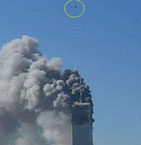 that anyone has yet got the imaginative measure of that terrifying day six years ago. Certainly our Tolstoy has not crawled out of the rubble. The closest we have, Don DeLillo, succeeded as an essayist-journalist ("In the Ruins of the Future: Reflections on Terror and Loss in the Shadow of September,” Harper’s, December 2001) but, to my mind, failed as a novelist ("Falling Man"). One reason, perhaps, is that the remembered emotion was instantly buried under a pile of cultural junk.' - Tod Gitlin in his review of Susan Faludi's The Terror Dream (written for