Happily received by email today:
"I'd like to take a moment to thank you & everyone else involved for PennSound & all related to it; I'm a performer & composer working in contemporary music in the UK, & I discovered PennSound while I was researching Olson, Niedecker, Cage & others during my Composition PhD. I think it's fair to say that it has changed my life, both in that it introduced me to poets who now are essential to me, & in that their work has been & continues as a constant inspiration for my own work, pushing me to think much harder & more creatively about form, score space & a host of other elements in the music I write. I also learnt to sing Jerry Rothenberg's Horse Songs (with his encouragement), which was fun."
skip to main |
skip to sidebar

facebook

[click on the photo for more]

I take it as a huge compliment.
 "I teach horizontally, meaning that while I might begin with a fixed idea of what I'm going to teach that day, I let it drift rhizomatically way off topic, often pulling it back when it gets too far. I rely on non-fixed materials to teach this way; the whole world is at my fingertips. Should I go off on a tangent about John and Rauschenberg and their love relationship as expressed in Rauschenberg's bed, an image of that bed is always a click away. From there, we can head anywhere into the non-fixed universe, be it film, text or sound. And of course, that always takes us elsewhere. As Cage says, 'We are getting nowhere fast.'" MORE...

"Naked sensibility at the extremist periphery.... Perception of an object means loosing it or losing it."

[click on the image for more]
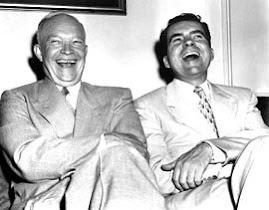
After looking at an abstract mural at the U.N. then President-elect Eisenhower said, "To be modern you don't have to be nuts."

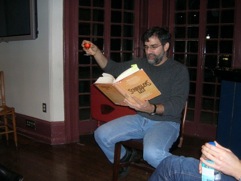
toasting the real Oskar Schindler

one of his word scultpures

Each year I host a 3-day poetry & poetics retreat at Frost Valley. It's named "Some Trees" after the early poem by John Ashbery.

(click on the pic)

[click on the photo for more]


subscribe via email
On days when I add to this blog you will receive a brief email notification.
Search This Blog
my sites:
[] home
[] twitter
[] modern American poetry & poetics
[] 1950s & Cold War culture
[] Holocaust
[] audio & video | medialinks
[] PENNsound podcasts
[] Writers House podcasts
[] PoemTalk (RSS feed)
[] PENNsound (with Charles Bernstein)
[] 1960 blog
[] Writers House Fellows
[] my links (RSS feed)
[] facebook notes
[] linkedin profile
[] articles & essays
[] modern American poetry & poetics
[] 1950s & Cold War culture
[] Holocaust
[] audio & video | medialinks
[] PENNsound podcasts
[] Writers House podcasts
[] PoemTalk (RSS feed)
[] PENNsound (with Charles Bernstein)
[] 1960 blog
[] Writers House Fellows
[] my links (RSS feed)
[] facebook notes
[] linkedin profile
[] articles & essays
what's new | RSS feed


"A man is not either stupid or intelligent, he is either free or not free."--written on a wall of the Faculte de Medecine, Paris, May 1968
guess who reads poetry?
[click on the photo for more]
1960
I take it as a huge compliment.
non-fixed materials
"I teach horizontally, meaning that while I might begin with a fixed idea of what I'm going to teach that day, I let it drift rhizomatically way off topic, often pulling it back when it gets too far. I rely on non-fixed materials to teach this way; the whole world is at my fingertips. Should I go off on a tangent about John and Rauschenberg and their love relationship as expressed in Rauschenberg's bed, an image of that bed is always a click away. From there, we can head anywhere into the non-fixed universe, be it film, text or sound. And of course, that always takes us elsewhere. As Cage says, 'We are getting nowhere fast.'" MORE...
praise
Jack Kimball's blog: "I guess it's no surprise Al Filreis runs one of the best pedagogic blogs. It operates as a topical resource portal, jammed with research ideas, a bloggy palliative for chronic unfocusedness."
William F. Buckley...

Howe on Dickinson
"Naked sensibility at the extremist periphery.... Perception of an object means loosing it or losing it."
PennSound Daily
on writing about 9/11
'To write well about catastrophes, especially catastrophes that—thanks to media immersion—“everybody knows,” requires a difficult hybrid of concentration, severity, delicacy, nearness and distance. I don’t know 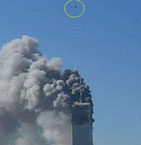 that anyone has yet got the imaginative measure of that terrifying day six years ago. Certainly our Tolstoy has not crawled out of the rubble. The closest we have, Don DeLillo, succeeded as an essayist-journalist ("In the Ruins of the Future: Reflections on Terror and Loss in the Shadow of September,” Harper’s, December 2001) but, to my mind, failed as a novelist ("Falling Man"). One reason, perhaps, is that the remembered emotion was instantly buried under a pile of cultural junk.' - Tod Gitlin in his review of Susan Faludi's The Terror Dream (written for Truthdig.com). MORE...
that anyone has yet got the imaginative measure of that terrifying day six years ago. Certainly our Tolstoy has not crawled out of the rubble. The closest we have, Don DeLillo, succeeded as an essayist-journalist ("In the Ruins of the Future: Reflections on Terror and Loss in the Shadow of September,” Harper’s, December 2001) but, to my mind, failed as a novelist ("Falling Man"). One reason, perhaps, is that the remembered emotion was instantly buried under a pile of cultural junk.' - Tod Gitlin in his review of Susan Faludi's The Terror Dream (written for Truthdig.com). MORE...absinthe...

so much to be scared of


I dislike
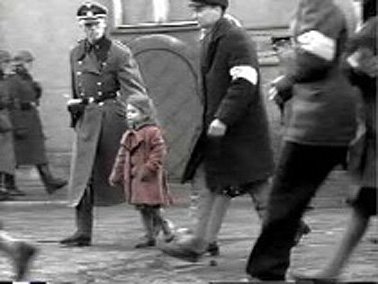

Alan Cranston's anti-fascism
When he returned to the United States, he saw a translation of Hitler's Mein Kampf for sale and, having read the original, recognized that it had been watered down to make it less worrisome to Americans, he said. So he quickly brought out an unauthorized, fuller translation and sold half a million copies of it for 10 cents apiece until the Third Reich sued him for copyright violation.
this blog supports open access
[click on the image for more]
modern art not nuts
After looking at an abstract mural at the U.N. then President-elect Eisenhower said, "To be modern you don't have to be nuts."
teaching Ashbery

after Auschwitz...

Writers House on Facebook

WCW's NJ, that impossible object
"If you go to Paterson, you may now happen upon a secret shrine to William Carlos Williams' poem. Although, it might not be there anymore. Composed of trash the Education Department leaves in the abandoned Hinchliffe Stadium (e.g. busted file cabinets, waterlogged textbooks, wobbly bookcarts), the shrine is itself subject to the vagaries of what constitutes trash and what art . . . and what, for that matter, desirable furniture. After the first day, the "library" aspect of the shrine--a small bench facing a bookshelf under a tree sprouting from the concrete and stocked with English textbooks and xeroxes of Paterson in baggies--was disrupted when someone must have realized that the bookshelf was indeed still a good book shelf, and took it away (even though it may have been there for years.) It must have been a critic, because they also let their dog "have their way" in the shrine as well."--from the blog New Jersey as an Impossible Object

electronic pedagogy
Magazine story published in 2001 about my use of e-media in teaching. "Postmodernist poets focused on the process of their poetry, rather than on what the words in their poems actually said. The purpose was to make poetry and language new again. There's no better way to describe Filreis' teaching style. He uses technology to free class time for discussion, which to Filreis is more important than the course material itself. The point is to develop his students' ability to think critically, not to have memorized every last fact about Gertrude Stein. And yet, he said, through that active engagement with the material, students end up remembering more of the content."
Erica Baum
mornings with Bob
"My favorite memory of Bob Lucid is from when he led the summer in London program in 1985 that I attended. He turned up one morning for class, seemingly drunk, and announced, 'What the world really needs is a good breakfast wine!'"--Ilona Koren-Deutsch
can't stop saying I dislike it...
Robert Lowell:


cognac
toasting the real Oskar Schindler
A hundred and twelve people were...
...asked to sign a petition that contained nothing except quotations from the Declaration of Independence and the Bill of Rights. One hundred and eleven of these people refused to sign that paper. [LINK]
poetry
‘Nothing is so sacred or so despicable that it cannot, at some time, be uttered as poetry.’--Alan Loney

Aggie anti-semitism
Tom Short, an itinerant evangelist brought to campus by the Texas A&M Christian Fellowship, told one student that, because she is Jewish, she is going "to burn in Hell." He told another Jewish student that "Hitler did not go far enough."

on John Ashbery's poetry
Between the high detail of the foreground and the abstract distance of the horizon, the reader is invited in. One can take one’s stuff; it is quite roomy. It is the space, say, of a city square, an open market, a corner bodega, a hotel lobby. Here we greet each other, exchange information and opinion, but because we are on our way elsewhere, a certain civility prevails; we do not intrude, or impose.

The Baroness Elsa von Freytag Loringhoven...
cut the most compelling modernist figure. She literally wore New York dada, thus inventing it as a pattern of aesthetic costume to be worn so tight that it was her skin, her self. MORE...
which is us, which them?

Wallace Stevens writing about a friend's mule and cow:
Somehow I do not care much about Lucera. I imagine her standing in the bushes at night watching your lamp a little way off and wondering what in the world you are doing. If it was she, she would be eating. No doubt she wonders whether you are eating words. But I take the greatest pride in now knowing Pompilio, who does not have to divest himself of anything to see things as they are. Do please give him a bunch of carrots with my regards. This is much more serious than you are likely to think from the first reading of this letter.
Tony Green of New Zealand
one of his word scultpures
Samuel Johnson on the lecture
"Lectures were once useful; but now, when all can read, and books are so numerous, lectures are unnecessary. If your attention fails, and you miss a part of a lecture, it is lost; you cannot go back as you do upon a book... People have nowadays got a strange opinion that everything should be taught by lectures. Now, I cannot see that lectures can do as much good as reading the books from which the lectures are taken. I know nothing that can be best taught by lectures, except where experiments are to be shown. You may teach chymistry by lectures. You might teach making shoes by lectures!"
Bloom and Stevens

"To argue against rock and roll...
is now as quaintly irrelevant as arguing for the divine right of kings." MORE...


Kerouac babble flow
Aw rust rust rust rust die die die pipe pipe ash ash die die ding dong ding ding ding rust cob die pipe ass rust die words-- I'd as rather be permiganted in Rusty's moonlight Rork as be perderated in this bile arta panataler where ack the orshy rosh crowshes my tired idiot hand 0 Lawd I is coming to you'd soon's you's ready's as can readies by Mazatlan heroes point out Mexicos & all ye rhythmic bay fishermen don't hang fish eye soppy in my Ramadam give--dgarette Sop of Arab Squat...

so much for creativity
"The guy who invented the wheel was an idiot. The guy who invented the other three, he was a genius."--Sid Caesar MORE>>>
Some Trees 2006
Each year I host a 3-day poetry & poetics retreat at Frost Valley. It's named "Some Trees" after the early poem by John Ashbery.
poetry would survive a post-literate situation
"I'm saying that the domain of poetry includes both oral & written forms, that poetry goes back to a pre-literate situation & would survive a post-literate situation, that human speech is a near-endless source of poetic forms, that there has always been more oral than written poetry, & that we can no longer pretend to a knowledge of poetry if we deny its oral dimension."--Jerome Rothenberg
how to write
The minute you disperse a crowd you have a sentence.--Gertrude Stein, How to Write

Tracie Morris
(click on the pic)
we all so have food
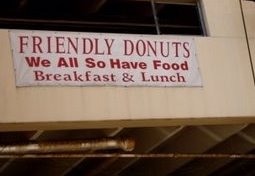
how impersonal should your prof be?
[click on the photo for more]
my categories
Kelly Writers House
(270)
poetry
(249)
PENNsound
(129)
holocaust
(94)
pedagogy
(88)
1950s
(77)
Wallace Stevens
(67)
modernism
(67)
tech
(61)
podcasts
(48)
PoemTalk
(47)
higher education
(45)
anticommunism
(41)
Penn
(39)
blogging
(38)
1960
(36)
antimodernism
(36)
Writers House Fellows
(35)
WCW
(32)
music
(28)
Charles Bernstein
(27)
photography
(26)
1930s
(24)
1960s
(23)
beats
(23)
baseball
(22)
communism
(21)
Lawrence Schwartzwald
(20)
sound poetry
(20)
Creeley
(19)
concrete poetry
(19)
digital culture
(19)
painting
(19)
TV
(18)
cold war
(18)
Gertrude Stein
(17)
film
(16)
Obama
(15)
fiction
(15)
Dickinson
(14)
Ezra Pound
(14)
conceptual art
(14)
twitter
(14)
universities
(14)
web2.0
(14)
CPCW
(13)
David Milch
(13)
English 88
(13)
Marjorie Perloff
(13)
New York City life
(13)
Susan Howe
(13)
conservatism
(13)
Philadelphia
(12)
election politics
(12)
Ron Silliman
(11)
arts
(11)
audio
(11)
books
(11)
end of the lecture
(11)
google gadget
(11)
oral poetry
(11)
Jewish culture
(10)
novel
(10)
poetry langpo
(10)
radio
(10)
Kenny Goldsmith
(9)
conceptual poetics
(9)
Ashbery
(8)
Robert Grenier
(8)
Rothenberg
(8)
YouTube
(8)
journalism
(8)
museums
(8)
social media
(8)
video
(8)
1950s poetry
(7)
Bob Perelman
(7)
George Oppen
(7)
Jacket magazine
(7)
Jacket2
(7)
Jerome Rothenberg
(7)
John Cage
(7)
Kerouac
(7)
Linh Dinh
(7)
Poetry Foundation
(7)
daily Al
(7)
folk songs
(7)
internet revolution
(7)
interview
(7)
poetry experiments
(7)
screenwriting
(7)
the left
(7)
Allen Ginsberg
(6)
Anthony DeCurtis
(6)
Duchamp
(6)
Joan Didion
(6)
Michael Nardone
(6)
Primo Levi
(6)
Tom Devaney
(6)
Walt Whitman
(6)
Zukofsky
(6)
baseball fan
(6)
electronic poetry
(6)
genocide
(6)
procedural poetry
(6)
sculpture
(6)
surrealism
(6)
teaching sound
(6)
transcription
(6)
webcasts
(6)
9/11
(5)
Bruce Andrews
(5)
Ginsberg
(5)
Jackson Mac Low
(5)
Ted Berrigan
(5)
archives
(5)
avant-gardism
(5)
book arts
(5)
community
(5)
conceptual poetry
(5)
iPhone
(5)
ideology
(5)
letterpress
(5)
personal
(5)
politics
(5)
telephony
(5)
1920s
(4)
1968
(4)
Cid Corman
(4)
Creative Writing
(4)
Dylan
(4)
Edward Albee
(4)
Facebook
(4)
Google
(4)
Hill Street Blues
(4)
Joyce Carol Oates
(4)
Lyn Hejinian
(4)
Mets
(4)
Nate Chinen
(4)
Susan Sontag
(4)
advertising
(4)
design
(4)
imagism
(4)
inauguration
(4)
intellectual property
(4)
new media
(4)
news
(4)
political poetry
(4)
radicalism
(4)
romanticism
(4)
translation
(4)
triumph of the therapeutic
(4)
visual poetry
(4)
1959
(3)
Aaron Kramer
(3)
African-American culture
(3)
Ammiel Alcalay
(3)
Barbara Guest
(3)
Bruce Springsteen
(3)
Burt Kimmelman
(3)
CA Conrad
(3)
Canada
(3)
Craig Saper
(3)
Edgar Allen Poe
(3)
Erica Baum
(3)
H.D.
(3)
Hemingway
(3)
ICA
(3)
Israel
(3)
Jack Spicer
(3)
Jennifer Scappettone
(3)
Joan Retallack
(3)
John Ashbery
(3)
Joseph McCarthy
(3)
Julia Bloch
(3)
Kit Robinson
(3)
Kristen Gallagher
(3)
Leonard Schwartz
(3)
Marcella Durand
(3)
New Left
(3)
New York School
(3)
PMA
(3)
Poetry magazine
(3)
Poets House
(3)
Ralph Ellison
(3)
Reznikoff
(3)
Robert Coover
(3)
Second Life
(3)
Sina Queyras
(3)
Steven Spielberg
(3)
Tan Lin
(3)
Terrence Des Pres
(3)
Tony Green
(3)
University of Chicago
(3)
anthologies
(3)
anti-Semitism
(3)
biography
(3)
cartoon
(3)
collage
(3)
contemporary art
(3)
culture wars
(3)
democracy
(3)
digital humanities
(3)
editing
(3)
feminism
(3)
fluxus
(3)
free speech
(3)
gallery
(3)
little magazines
(3)
media
(3)
memoir
(3)
online learning
(3)
performance poetry
(3)
poetry reading
(3)
printing
(3)
psychoanalysis
(3)
publishing
(3)
songwriting
(3)
sound art
(3)
the Baroness
(3)
1940s
(2)
1970s
(2)
Adrienne Rich
(2)
Anne Tardos
(2)
Apple
(2)
Arthur Miller
(2)
Bernadette Mayer
(2)
Blackburn
(2)
Bob Brown
(2)
Carl Rakosi
(2)
Celan
(2)
Chicago
(2)
China
(2)
Chinese poets
(2)
Chomsky
(2)
Claude Lanzmann
(2)
Didion
(2)
Don Share
(2)
Dwight Eisenhower
(2)
Eileen Myles
(2)
Elise Cowan
(2)
Elizabeth Alexander
(2)
Etheridge Knight
(2)
Filreis family
(2)
France
(2)
Frank Sherlock
(2)
Freud
(2)
Frost Valley
(2)
Gil Ott
(2)
Gregory Djanikian
(2)
Gwendolyn Brooks
(2)
Harvard
(2)
Hejinian
(2)
Jessica Lowenthal
(2)
John Hollander
(2)
John Tranter
(2)
KWHFellows2010
(2)
Larry Eigner
(2)
Los Angeles
(2)
Lytle Shaw
(2)
MLA
(2)
Mark Rothko
(2)
Mark Van Doren
(2)
Mary Gordon
(2)
Melville
(2)
Modern art
(2)
Nazi ideology
(2)
New Criticism
(2)
New York Times
(2)
New Zealand
(2)
North of Invention
(2)
O'Hara
(2)
Olson
(2)
Paul Celan
(2)
Pete Seeger
(2)
Philadelphia Inquirer
(2)
Pierre Joris
(2)
Poland
(2)
Rachel Blau DuPlessis
(2)
Rae Armantrout
(2)
Republicans
(2)
Rexroth
(2)
Rimbaud
(2)
Rob Fitterman
(2)
Robert Duncan
(2)
Robert Frost
(2)
Rosemarie Waldrop
(2)
San Francisco
(2)
Second Lie
(2)
Semina
(2)
Soviet Union
(2)
Spanish Civil War
(2)
Stanley Burnshaw
(2)
Steve Benson
(2)
Susan Bee
(2)
Susan Cheever
(2)
Susan Schultz
(2)
Tan Lan
(2)
Thanksgiving
(2)
Thoreau
(2)
Tom Phillips
(2)
Ubuweb
(2)
WW2
(2)
Wallace Berman
(2)
West Philadephia
(2)
William Shakespeare
(2)
Yom Kippur
(2)
Zen
(2)
aesthetic ideology
(2)
ambient poetics
(2)
antiSemitism
(2)
antifascism
(2)
book reviews
(2)
botanical garden
(2)
conferences
(2)
copyright
(2)
cubism
(2)
cut-ups
(2)
dementia
(2)
digital editing
(2)
eco-poetics
(2)
economics
(2)
endofideology
(2)
environmentalism
(2)
ephemeral art
(2)
experimental theatre
(2)
fascism
(2)
flarf
(2)
food
(2)
futurism
(2)
gender
(2)
grammar
(2)
humanities
(2)
hypertext
(2)
iGoogle gadget
(2)
information
(2)
language theory
(2)
list poem
(2)
lists
(2)
marketing
(2)
meter
(2)
narrative
(2)
neo-Nazis
(2)
occasional poetry
(2)
open access
(2)
philanthropy
(2)
plagiarism
(2)
political correctness
(2)
pop art
(2)
prose
(2)
psychology
(2)
public radio
(2)
racism
(2)
reading
(2)
remix
(2)
renal disease
(2)
reviewing
(2)
seminar
(2)
short fiction
(2)
singer-songwriter
(2)
spoken-word poetry
(2)
testimony
(2)
the survivor
(2)
urban life
(2)
ut pictura poesis
(2)
virtual reality
(2)
war
(2)
writer-activists
(2)
15th Room Press
(1)
18th-century verse
(1)
1949
(1)
1963
(1)
1969
(1)
1976
(1)
1980s
(1)
1988
(1)
1994
(1)
1995
(1)
2000
(1)
Africa
(1)
African American poets
(1)
Alan Loney
(1)
Alan Wald
(1)
Alaska
(1)
Aldon Nielsen
(1)
Aldous Huxley
(1)
Alice Eliot Dark
(1)
Alice Neel
(1)
American West
(1)
American folk
(1)
American poetry
(1)
Amiri Baraka
(1)
Andrew Whitman
(1)
Anne Waldman
(1)
Antigone
(1)
Arabic
(1)
Arlen Specter
(1)
Arthur Leipzig
(1)
Auschwitz
(1)
Australian poetry
(1)
B.J. Leggett
(1)
Barnett Newman
(1)
Baseball Hall of Fame
(1)
Baudelaire
(1)
Beloit College
(1)
Ben Friedlander
(1)
Beth Kephart
(1)
Black Mountain
(1)
Bob Feller
(1)
Bowery Poetry Club
(1)
Brancusi
(1)
Brian Kim Stefans
(1)
Brion Gysin
(1)
Camden
(1)
Carl Bernstein
(1)
Cary Nelson
(1)
Charles Alexander
(1)
Charles Olson
(1)
Christian Bok
(1)
Christian Boltanski
(1)
Christmas
(1)
Claes Oldenberg
(1)
Claude McKay
(1)
Cole Swensen
(1)
Columbus Day
(1)
Common Press
(1)
Coover
(1)
Critical Writing
(1)
Cross-Cultural Poetics
(1)
Cuban poetry
(1)
Curtis Fox
(1)
Cynthia Ozick
(1)
Daniel Bell
(1)
Daniel Hoffman
(1)
Danny Snelson
(1)
David Antin
(1)
David Grubbs
(1)
David Melzer
(1)
David Pavelich
(1)
David Yezzi
(1)
Denise Levertov
(1)
Dennis Franz
(1)
Dick Higgins
(1)
Disney
(1)
Doctorow
(1)
Donald Davidson
(1)
Donald Hall
(1)
Doug Glanville
(1)
Du Bois
(1)
Ear Inn
(1)
Edward Ragg
(1)
Eudora Welty
(1)
F. Scott Fitzgerald
(1)
FBI
(1)
FOIA
(1)
Fanny Howe
(1)
Florida
(1)
Folkways records
(1)
Frank Lloyd Wright
(1)
Frank O'Hara
(1)
Fred Wah
(1)
Gary Barwin
(1)
Gary Snyder
(1)
Gene Tata
(1)
George Economou
(1)
Golda Meir
(1)
Grace Paley
(1)
Great Books
(1)
Great Britain
(1)
Greenwich Village
(1)
Haiti
(1)
Hank Lazer
(1)
Heather Fuller
(1)
Helen Adam
(1)
Helen Vendler
(1)
Henry Kissinger
(1)
Henry Miller
(1)
Henry Rago
(1)
Herman Beavers
(1)
Howard Fast
(1)
Howard Fineman
(1)
Hugh Kenner
(1)
Huntington Library
(1)
Indian poetry
(1)
Iraq War
(1)
Ivy League
(1)
James Joyce
(1)
James T. Farrell
(1)
Jan Karski
(1)
Jen Bervin
(1)
Jena Osman
(1)
Jews and blacks
(1)
Jim Morrison
(1)
Joe Milutis
(1)
John Cheever
(1)
John Felstiner
(1)
John Giannotti
(1)
John Giorno
(1)
John Keats
(1)
John Marin
(1)
John McPhee
(1)
John Richetti
(1)
John Wieners
(1)
John Yau
(1)
Johnny Cash
(1)
Jonathan Edwards
(1)
Jose Rodriguez-Feo
(1)
Joseph Kosuth
(1)
Josh Schuster
(1)
Judaism
(1)
Judith Goldman
(1)
Juliana Spahr
(1)
Kafka
(1)
Karen Finley
(1)
Kathleen Fraser
(1)
Katrina
(1)
Keith Richards
(1)
Kennedy
(1)
Kenneth Irby
(1)
Kenneth Koch
(1)
Kent Johnson
(1)
Kerry Sherin Wright
(1)
Kindle
(1)
Kipling
(1)
Klaus Barbie
(1)
Koch
(1)
Laurie Anderson
(1)
Lawrence Ferlinghetti
(1)
Lemon Hound
(1)
Leni Riefenstahl
(1)
Lewis Warsh
(1)
Ligorano Reese
(1)
Lisa New
(1)
London
(1)
Lorenzo Thomas
(1)
Lorine Niedecker
(1)
Lynn Keller
(1)
MFA programs
(1)
MTV
(1)
Maggie Estep
(1)
Maggie O'Sullivan
(1)
Mailer
(1)
Marinetti
(1)
Mark Nowak
(1)
Masefield
(1)
Maximus Poems
(1)
Mel Nichols
(1)
Michael Cunningham
(1)
Michael Davdson
(1)
Michael Heller
(1)
Michelle Taransky
(1)
Mike Hennessey
(1)
Mils College
(1)
Miro
(1)
MoMA
(1)
Mosaic
(1)
Muhammad Ali
(1)
Muriel Rukeyser
(1)
Myung Mi Kim
(1)
NASA
(1)
NYPD Blue
(1)
Nazi doctors
(1)
Neil Young
(1)
Netscape
(1)
New American Poetry
(1)
New Deal
(1)
New Masses
(1)
New York Knicks
(1)
Nick Montfort
(1)
Nicole Broussard
(1)
Noman Fischer
(1)
Norman Fischer
(1)
Norman Rosten
(1)
Oskar Schindler
(1)
Pacifica Radio
(1)
Paris
(1)
Parker Tyler
(1)
Patrick Durgin
(1)
Patti Smith
(1)
Paul Hoover
(1)
Peter Gizzi
(1)
Phil Jackson
(1)
Phil Ochs
(1)
Philip Lopate
(1)
Philip Roth
(1)
Phillip Barron
(1)
PhillyTalks
(1)
Pier Marton
(1)
Polish poetry
(1)
Pound
(1)
Rachel Zolf
(1)
Ray DiPalma
(1)
Richard Ford
(1)
Richard Nixon
(1)
Robert Frank
(1)
Robert Lucid
(1)
Robert Motherwell
(1)
Robert von Hallberg
(1)
Rockefeller
(1)
Roger Angell
(1)
Rolling Stones
(1)
Ronald Lane Latimer
(1)
Roy Cohn
(1)
Rufus Wainwright
(1)
Rukeyser
(1)
Russia
(1)
SDS
(1)
Sackner Archive
(1)
Sally Van Doren
(1)
Sandy Frazier
(1)
Sarah Dowling
(1)
Satchell Paige
(1)
Scott Rettberg
(1)
Segue
(1)
Shawn Walker
(1)
Smith Act
(1)
Stanford University
(1)
Stanley Fish
(1)
Stephen Jay Gould
(1)
Steve Earle
(1)
Steve Evans
(1)
Steve McCaffrey
(1)
Sylvia Plath
(1)
Ted Forstmann
(1)
Ted Greenwald
(1)
The Dial
(1)
Third Factory
(1)
Thom Donovan
(1)
Tina Darragh
(1)
Tom Mandel
(1)
Tony Kushner
(1)
Tony Trigilio
(1)
Tracie Morris
(1)
Tuli Kupferberg
(1)
University of Virginia
(1)
Vachel Lindsay
(1)
Vanessa Place
(1)
Victorianism
(1)
Vietnam War
(1)
Virginia Quarterly Review
(1)
Virginia Woolf
(1)
Vladimir Nabokov
(1)
Waldrops
(1)
Wallace Fowlie
(1)
Warhol
(1)
Warsaw ghetto uprising
(1)
Will Alexander
(1)
William Burroughs
(1)
Winston Churchill
(1)
Woody Guthrie
(1)
World War II
(1)
Wyatt Mason
(1)
Wystan Curnow
(1)
XPN
(1)
Yale
(1)
Yeats
(1)
Yvor Winters
(1)
Zach Djanikian
(1)
Zionism
(1)
Zoe Strauss
(1)
abecedarianism
(1)
abstract expressionism
(1)
academic freedom
(1)
addiction
(1)
aleatory writing
(1)
anti-art
(1)
anti-nuclear
(1)
aphorisms
(1)
applications
(1)
apprenticeships
(1)
architecture
(1)
archive
(1)
artificial intelligence
(1)
atomic age
(1)
autocorrect
(1)
babble flow
(1)
basketball
(1)
bearing witness
(1)
boxing
(1)
business school
(1)
catalogue
(1)
censorship
(1)
children
(1)
cinema studies
(1)
coal mining
(1)
coffee
(1)
colloquialisms
(1)
comix
(1)
computers
(1)
computing suport
(1)
constraint-based writing
(1)
constructivism
(1)
contemporary poetry
(1)
content
(1)
creative campus
(1)
curatorship
(1)
cyborgs
(1)
dada
(1)
defense of poetry
(1)
deradmod
(1)
dialysis
(1)
disabilities
(1)
domestic life
(1)
drama
(1)
drawing
(1)
early humans
(1)
electronic text
(1)
elegy
(1)
emphemera
(1)
epic poem
(1)
first amendment
(1)
flowers
(1)
football
(1)
form
(1)
free verse
(1)
fugutive poets
(1)
fund-raising
(1)
funk
(1)
game theory
(1)
gaming
(1)
gardens
(1)
gay life
(1)
graphical browser
(1)
green economics
(1)
happenings
(1)
health care
(1)
iPad
(1)
iTunes
(1)
immigration
(1)
imperialism
(1)
improvisation
(1)
installation art
(1)
international poetry
(1)
internships
(1)
jazz
(1)
language
(1)
legal implications of art
(1)
legal studies
(1)
libraries
(1)
linguistics
(1)
literary history
(1)
manifestos
(1)
manuscripts
(1)
marginalia
(1)
math
(1)
media art
(1)
memory
(1)
meta-poetry
(1)
military
(1)
money
(1)
monumental art
(1)
mountains
(1)
mp3
(1)
mythology
(1)
nonsense
(1)
objectivists
(1)
old age
(1)
parody
(1)
poetry books
(1)
political writing
(1)
popular culture
(1)
position-taking
(1)
postmodernism
(1)
pre-professionalism
(1)
privacy
(1)
proletarian novel
(1)
prosody
(1)
protest
(1)
public art
(1)
puppet theater
(1)
puritanism
(1)
quarterlies
(1)
quotation marks
(1)
readies
(1)
recession
(1)
religion
(1)
restaurants
(1)
science
(1)
sexism
(1)
sleep
(1)
small press
(1)
smoking
(1)
social networking
(1)
socialism
(1)
sociology
(1)
sonnet
(1)
southern culture
(1)
spin
(1)
students
(1)
talk
(1)
talk poems
(1)
the constitution
(1)
the law
(1)
the lyric
(1)
the presidency
(1)
the sentence
(1)
the writer's life
(1)
theater
(1)
typewriter
(1)
typography
(1)
undergraduate research
(1)
unions
(1)
value
(1)
visionary romanticism
(1)
voice
(1)
war criminals
(1)
water
(1)
wine
(1)
women
(1)
women in higher education
(1)
word sculptures
(1)
words
(1)
world wide web
(1)
yelp
(1)
