“Muriel Rukeyser came from a specific line of privileged New York German Jews. Her own mission was to criticize, according to leftist and feminist politics deeply rooted in the Eastern European Socialist tradition, economic and social exploitation. Her poems, as I see it, are the beginning of a startling, deeply important movement, or series of movements, that involve fields as diverse as poetry, art, dancing, economics, and politics.”--Gerald Stern in Nextbook. MORE>>>
Yes, okay, but not "the beginning." She came of age poetically and politically at the end of the 1930s, and she took advantage of movements of the 1920s and of the '30s (distinctly and also converged) that set collage (in the Juan Gris but also the John Dos Passos sense) side by side with the documentary urge. Not to press the point too hard, for Stern here seems to be an ally of this important modern combination: yet this assumption--"her poems...are the beginning"--is one of remnants of the campaign in the postwar period to deny or forget that the two radicalisms--aesthetic and political--ever consorted. But they did, and Muriel Rukeyser appeared on the scene when that merge had already been made possible.


 "I teach horizontally, meaning that while I might begin with a fixed idea of what I'm going to teach that day, I let it drift rhizomatically way off topic, often pulling it back when it gets too far. I rely on non-fixed materials to teach this way; the whole world is at my fingertips. Should I go off on a tangent about John and Rauschenberg and their love relationship as expressed in Rauschenberg's bed, an image of that bed is always a click away. From there, we can head anywhere into the non-fixed universe, be it film, text or sound. And of course, that always takes us elsewhere. As Cage says, 'We are getting nowhere fast.'"

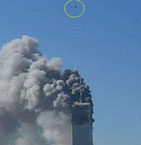 that anyone has yet got the imaginative measure of that terrifying day six years ago. Certainly our Tolstoy has not crawled out of the rubble. The closest we have, Don DeLillo, succeeded as an essayist-journalist ("In the Ruins of the Future: Reflections on Terror and Loss in the Shadow of September,” Harper’s, December 2001) but, to my mind, failed as a novelist ("Falling Man"). One reason, perhaps, is that the remembered emotion was instantly buried under a pile of cultural junk.' - Tod Gitlin in his review of Susan Faludi's The Terror Dream (written for