A new PennSound podcast features Robert Creeley talking with me and others in April 2000. He was, that spring, a Kelly Writers House Fellow. During the conversation we talk about his love poetry; Bob Perelman asks him why if in his early writing he wanted to "Make It New" he seemed now to want to make it old; Stuart Curran asks about content as an extension of form*; Marjorie Perloff calls in from California; he plays a recording of his voice-recognition robot reciting his poems; etc. The event was originally webcast live.
* In "Projective Verse" Charles Olson quotes Creeley's remark that "Form is never more than an extension of content."


 "I teach horizontally, meaning that while I might begin with a fixed idea of what I'm going to teach that day, I let it drift rhizomatically way off topic, often pulling it back when it gets too far. I rely on non-fixed materials to teach this way; the whole world is at my fingertips. Should I go off on a tangent about John and Rauschenberg and their love relationship as expressed in Rauschenberg's bed, an image of that bed is always a click away. From there, we can head anywhere into the non-fixed universe, be it film, text or sound. And of course, that always takes us elsewhere. As Cage says, 'We are getting nowhere fast.'"

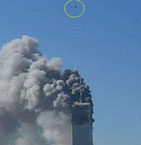 that anyone has yet got the imaginative measure of that terrifying day six years ago. Certainly our Tolstoy has not crawled out of the rubble. The closest we have, Don DeLillo, succeeded as an essayist-journalist ("In the Ruins of the Future: Reflections on Terror and Loss in the Shadow of September,” Harper’s, December 2001) but, to my mind, failed as a novelist ("Falling Man"). One reason, perhaps, is that the remembered emotion was instantly buried under a pile of cultural junk.' - Tod Gitlin in his review of Susan Faludi's The Terror Dream (written for