You can listen to a podcast version of this entry.
Bill Owen was gentle and effective. In his day he was a major university administrative player. In retirement he was a genial presence - knew what needed to happen but never raised his voice about it. He was on the Board of Penn's Class of 1942 when I met him in my days as "Class of 1942 Professor." He and I quickly decided that together we would induce the class to make a donation to enable the renovation of the garden outside the Kelly Writers House on Penn's campus. It worked.
 We completely redid the garden - beautiful stones, a William Carlos Williams poem engraved along a path, new flower beds of locally native flowers, shrubs, and trees, and a great watering system. The spring there is gorgeous.
 Bill died recently. He was not just a Penn friend of mine, but, as it happens, the father of my son's fourth-grade teacher at a local Quaker school. So through that doubled connection I got a chance to teach Williams' poetry to 10 year olds! ("Joy,
 joy!" as WCW might have said without a trace of irony.)
I didn't know Bill Owen well but I sense the loss of his presence. Universities tend to forget even very efficacious administrators, but I'll try not to. Bill ran the whole development effort here, was in Admissions for some years, and served as the University's "secretary" (managing trustees and overseers, etc.).
Please look at this obituary and try to read between the lines: see if you can the kind of person that makes so much of what we do possible.
Here's the Williams poem in the garden. Today it's for Bill:
The Quality of Heaven
  William Carlos Williams

Without other cost than breath
and the poor soul,
carried in the cage of the ribs,
chirping shrilly

I walked in the garden. The
garden smelled of roses.
The lilies' green throats opened
to yellow trumpets

that craved no sound and the rain
was fresh in my face,
the air a sweet breath.

                      Yesterday
the heat was oppressive

dust clogged the leaves' green
and bees from
the near hive, parched, drank,
overeager, at

the birdbath and were drowned there.
Others replaced them
from which the birds were
frightened.

           --the fleece-light air!


 "I teach horizontally, meaning that while I might begin with a fixed idea of what I'm going to teach that day, I let it drift rhizomatically way off topic, often pulling it back when it gets too far. I rely on non-fixed materials to teach this way; the whole world is at my fingertips. Should I go off on a tangent about John and Rauschenberg and their love relationship as expressed in Rauschenberg's bed, an image of that bed is always a click away. From there, we can head anywhere into the non-fixed universe, be it film, text or sound. And of course, that always takes us elsewhere. As Cage says, 'We are getting nowhere fast.'"

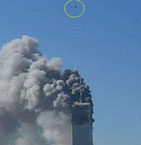 that anyone has yet got the imaginative measure of that terrifying day six years ago. Certainly our Tolstoy has not crawled out of the rubble. The closest we have, Don DeLillo, succeeded as an essayist-journalist ("In the Ruins of the Future: Reflections on Terror and Loss in the Shadow of September,” Harper’s, December 2001) but, to my mind, failed as a novelist ("Falling Man"). One reason, perhaps, is that the remembered emotion was instantly buried under a pile of cultural junk.' - Tod Gitlin in his review of Susan Faludi's The Terror Dream (written for