Now, at the Kelly Writers House main page, you'll see daily (or almost daily) updates, news, links to featured recordings, info about the upcoming reading. And be sure to subscribe to the feed.
 The Writers House was founded in 1995-96 as a writer-centered bottom-up writers' haven or sandbox, and by now, a dozen years later, we offer 300 events - seminars, lectures, readings, book groups, manuscript exchanges, mentorships, symposia on all forms of writing - each academic year, September through May. All events are free.
We have an archive of media files - audio and some video, mostly mp3 but also RealAudio and RealVideo - of hundreds of readings and talks. It's called medialinks. There's also an archive of webcast recordings - of (to name a few writers) Laurie Anderson, Robert Creeley, Thalia Field, Lyn Hejinian, Tony Kushner, Alice Notley, James Alan McPherson, Carl Rakosi, Susan Sontag, Slavoj Zizek. We have a podcast series that on this date has produced 15 programs. We host week-long and month-long book discussion groups.
 Best of all, we've made a bunch of good friends - mostly, I think, by treating writers well, by feeding them fabulous food and by bringing to them and their art audiences that typically have read carefully, ask thoughtful questions and don't mind disagreeing.
[] "You have created at once a center of artistic and personal social power, a non-bureacratic, unconventional power in one spot without being marginalized in the process. Brilliant."--Nick Spitzer, host of NPR's radio show, American Roots.
[] "The people at the Writers House have created such a lively and hospitable environment that I love to walk in and teach there. I just finished reading a manuscript about the University of Chicago in the 1950's and that literary environment, and I thought that Writers House might have saved a lot people in that era."--Max Apple, author of The Oranging of America and many other books, and member of the Writers House "hub" since autumn 2001.
[] "I keep telling everyone I see that this is an amazing thing you have here, this house of writers. It exists in no other space that I can think of in the United States. We were talking about that earlier, this question of a place for writers and translators, where poets and artists can come together and work, in a sense, in collaboration. It is amazing. So thank you."--Ben Hollander, poet and participant in "UnAmerican Poetry," a conversation about writing, translation, globalization, politics in the Middle East, the foreign poet's relation to language in March 2001.


 "I teach horizontally, meaning that while I might begin with a fixed idea of what I'm going to teach that day, I let it drift rhizomatically way off topic, often pulling it back when it gets too far. I rely on non-fixed materials to teach this way; the whole world is at my fingertips. Should I go off on a tangent about John and Rauschenberg and their love relationship as expressed in Rauschenberg's bed, an image of that bed is always a click away. From there, we can head anywhere into the non-fixed universe, be it film, text or sound. And of course, that always takes us elsewhere. As Cage says, 'We are getting nowhere fast.'"

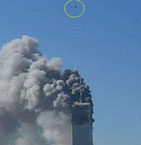 that anyone has yet got the imaginative measure of that terrifying day six years ago. Certainly our Tolstoy has not crawled out of the rubble. The closest we have, Don DeLillo, succeeded as an essayist-journalist ("In the Ruins of the Future: Reflections on Terror and Loss in the Shadow of September,” Harper’s, December 2001) but, to my mind, failed as a novelist ("Falling Man"). One reason, perhaps, is that the remembered emotion was instantly buried under a pile of cultural junk.' - Tod Gitlin in his review of Susan Faludi's The Terror Dream (written for