Ron Silliman, who knew Mario Savio fairly well in Berkeley, tells me that Savio did not seek out his leadership role in the Berkeley Free Speech Movement - that he was shy; that he would rather, finally, have been studying his Philosophy. Anyway, his FSM work certainly distorted his life. He had a history of heart trouble and (since this blog is not official biography, nor history, etc.) let's just speculate that the heroic role and its aftermath shortened his life as well. He died at 53 in 1996.
 In my own top ten list of great speeches, somewhere up around 5th is Savio's brilliant, stirring, apparently improvised speech on Dec. 2, 1964, spoken from Sproul Plaza in front of Berkeley's main administration building. I have always been stunned by the aptness of his analogy between the big research university (the way it used to treat its undergrads--and to some degree still does) and the factory machine.
I admired this because Savio is turning around the metaphor Berkeley chancellor Clark Kerr already used to describe postwar higher education: it was, said Kerr proudly and patriotically, a "knowledge factory."
I admired the speech even more when I learned that Savio's father was a machine punch operator.
"There is a time," he said, "when the operation of the machine becomes so odious, makes you so sick at heart, that you can't take part; and you've got to put your bodies upon the gears and upon the wheels, upon the levers, upon all the apparatus and you've got to make it stop. And you've got to indicate to the people who run it, to the people who own it, that unless you're free, the machine will be prevented from working at all."
In my 1950s site, I've reproduced the New York Times obituary.


 "I teach horizontally, meaning that while I might begin with a fixed idea of what I'm going to teach that day, I let it drift rhizomatically way off topic, often pulling it back when it gets too far. I rely on non-fixed materials to teach this way; the whole world is at my fingertips. Should I go off on a tangent about John and Rauschenberg and their love relationship as expressed in Rauschenberg's bed, an image of that bed is always a click away. From there, we can head anywhere into the non-fixed universe, be it film, text or sound. And of course, that always takes us elsewhere. As Cage says, 'We are getting nowhere fast.'"

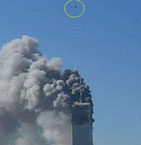 that anyone has yet got the imaginative measure of that terrifying day six years ago. Certainly our Tolstoy has not crawled out of the rubble. The closest we have, Don DeLillo, succeeded as an essayist-journalist ("In the Ruins of the Future: Reflections on Terror and Loss in the Shadow of September,” Harper’s, December 2001) but, to my mind, failed as a novelist ("Falling Man"). One reason, perhaps, is that the remembered emotion was instantly buried under a pile of cultural junk.' - Tod Gitlin in his review of Susan Faludi's The Terror Dream (written for