Oh conventional, well-adjusted American students of art, thwart your attraction to Gauguin, don't sign up for a Pacific troop transport and fight World War II for the wrong (namely, aesthetic) reasons. There can be only one right, well-adjusted reason to fight in the Pacific circa 1944. Aesthetic obsession ain't it. To me, this is the gist of Raditzer, Peter Matthiessen's third novel (1961). Click here to go to my 1960 blog, and read a bit more about the American named Stark who drift inexorably into his aesthetic heart of darkness.
Wednesday, May 07, 2008
beware the art student at war for wrong reasons
Oh conventional, well-adjusted American students of art, thwart your attraction to Gauguin, don't sign up for a Pacific troop transport and fight World War II for the wrong (namely, aesthetic) reasons. There can be only one right, well-adjusted reason to fight in the Pacific circa 1944. Aesthetic obsession ain't it. To me, this is the gist of Raditzer, Peter Matthiessen's third novel (1961). Click here to go to my 1960 blog, and read a bit more about the American named Stark who drift inexorably into his aesthetic heart of darkness.


 "I teach horizontally, meaning that while I might begin with a fixed idea of what I'm going to teach that day, I let it drift rhizomatically way off topic, often pulling it back when it gets too far. I rely on non-fixed materials to teach this way; the whole world is at my fingertips. Should I go off on a tangent about John and Rauschenberg and their love relationship as expressed in Rauschenberg's bed, an image of that bed is always a click away. From there, we can head anywhere into the non-fixed universe, be it film, text or sound. And of course, that always takes us elsewhere. As Cage says, 'We are getting nowhere fast.'"

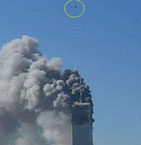 that anyone has yet got the imaginative measure of that terrifying day six years ago. Certainly our Tolstoy has not crawled out of the rubble. The closest we have, Don DeLillo, succeeded as an essayist-journalist ("In the Ruins of the Future: Reflections on Terror and Loss in the Shadow of September,” Harper’s, December 2001) but, to my mind, failed as a novelist ("Falling Man"). One reason, perhaps, is that the remembered emotion was instantly buried under a pile of cultural junk.' - Tod Gitlin in his review of Susan Faludi's The Terror Dream (written for