Here is the first paragraph of Bob Perelman's old article "Building a More Powerful Vocabulary: Bruce Andrews and the World (Trade Center)":
Not many days after the 1993 bombing of the World Trade Center, the New York Times ran an article discussing the structure of the building and the possibilities of its being brought down by a larger and more thoughtfully placed explosion. It turns out not to be easy: apparently, each tower is built to withstand the impact of a fully loaded jet liner taking off. In addition to the strength of the structure, attackers would have to confront its complexity: there are twenty-one load- bearing pillars and they could not be reached simultaneously by the force of an explosion. In being destroyed, a particular section would in fact shield other areas by absorbing the impact. The timing and placement of the article is interesting in itself: it was a rapid-response anodyne to the spiral of geopolitical urban trauma while at the same time, under the cover of a discussion of engineering, it invited its readers to participate in transgressive calculations of how the Trade Center towers might actually be brought down.
Just a bit more of this article can be read here. The link to Bob Perelman's own home page seems to have broken in the years since I first excerpted the article for my students. Not sure why. I'll ask Bob.


 "I teach horizontally, meaning that while I might begin with a fixed idea of what I'm going to teach that day, I let it drift rhizomatically way off topic, often pulling it back when it gets too far. I rely on non-fixed materials to teach this way; the whole world is at my fingertips. Should I go off on a tangent about John and Rauschenberg and their love relationship as expressed in Rauschenberg's bed, an image of that bed is always a click away. From there, we can head anywhere into the non-fixed universe, be it film, text or sound. And of course, that always takes us elsewhere. As Cage says, 'We are getting nowhere fast.'"

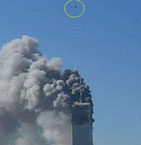 that anyone has yet got the imaginative measure of that terrifying day six years ago. Certainly our Tolstoy has not crawled out of the rubble. The closest we have, Don DeLillo, succeeded as an essayist-journalist ("In the Ruins of the Future: Reflections on Terror and Loss in the Shadow of September,” Harper’s, December 2001) but, to my mind, failed as a novelist ("Falling Man"). One reason, perhaps, is that the remembered emotion was instantly buried under a pile of cultural junk.' - Tod Gitlin in his review of Susan Faludi's The Terror Dream (written for