Have you been checking on "PennSound Daily" lately? Good stuff there. Almost daily entries compiled by Mike Hennessey.
 The newest update announces the good news that Mike and the PennSound team have split up Jerome Rothenberg's April poetry reading at the Writers House into individual poem recordings.
Here's what Mike has to say, in part:
Drawing heavily from the three books collected in Trilogy (Poland/1931, Khurbn and The Burning Babe), as well as 1968's Technicians of the Sacred, 1999's A Paradise of Poets and 2003's A Book of Concealments, the poet read for nearly ninety-minutes, leaving his audience clamoring for more as he concluded with "Night Poems in Memoriam Jackson Mac Low," and a rousing rendition of A Seneca Journal's "Old Man Beaver's Blessing Song," a favorite of the students with whom he'd worked during his visit to UPenn. Of course, Rothenberg's illuminating conversation with PennSound co-director Al Filreis is also available, as is PoemTalk #7, in which Filreis, Bob Holman, Randall Couch and Jessica Lowenthal discuss Rothenberg's poem, "A Paradise of Poets."
Since his springtime visit, Rothenberg has kept busy, launching his new blog, Poems and Poetics, as well as the collection Poetics and Polemics: 1980-2005. This Sunday, from 4:00-6:00 at the Bowery Poetry Club, he'll be leading a 40th Anniversary Celebration of Technicians of the Sacred, which will also feature Charles Bernstein, George Economou, Bob Holman, Pierre Joris, Charlie Morrow, Rochelle Owens, Nicole Peyrafitte, Diane Rothenberg, Carolee Schneemann, and Cecilia Vicuna. Click here for more information on that event, and click here to experience Rothenberg's masterful April reading one more time.


 "I teach horizontally, meaning that while I might begin with a fixed idea of what I'm going to teach that day, I let it drift rhizomatically way off topic, often pulling it back when it gets too far. I rely on non-fixed materials to teach this way; the whole world is at my fingertips. Should I go off on a tangent about John and Rauschenberg and their love relationship as expressed in Rauschenberg's bed, an image of that bed is always a click away. From there, we can head anywhere into the non-fixed universe, be it film, text or sound. And of course, that always takes us elsewhere. As Cage says, 'We are getting nowhere fast.'"

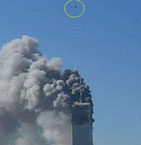 that anyone has yet got the imaginative measure of that terrifying day six years ago. Certainly our Tolstoy has not crawled out of the rubble. The closest we have, Don DeLillo, succeeded as an essayist-journalist ("In the Ruins of the Future: Reflections on Terror and Loss in the Shadow of September,” Harper’s, December 2001) but, to my mind, failed as a novelist ("Falling Man"). One reason, perhaps, is that the remembered emotion was instantly buried under a pile of cultural junk.' - Tod Gitlin in his review of Susan Faludi's The Terror Dream (written for