I've downloaded a few useful apps to my new iPhone. One is an RSS Reader that allows me to pick up top news and magazine items, features under various topics, as well as links to new web stuff in fields of my interest, without the strain/time of having to download these items. The thing gives a quickly loaded look at stories and links of the moment, and then I can go follow up by reading full web versions if I want. Not that the iPhone is slow to browse the web, but it's slower than this RSS feed gives me a top look.
My newest app is called "Files lite," a free program that acts as a documents folder. Yes, I can put documents (in Word, in PDF, in Excel, in HTML [e.g. saved web pages]) onto my phone! I'm working on an essay so I've put the latest draft there, which means (am I being obsessive about my time? maybe) I can re-read and ponder changes wherever I find myself stalled, waiting in line, stuck between meetings. I've also put there the text of a few poems I want to read often and really come to know. The photo here is a standard screen shot of this app in action; it's not my phone. I snapped a shot of my phone but find it's hard to take a good picture of the glassy surface of this otherwise utterly and fabulously accommodating device, the iPhone G3.
A happy shout-out to Mark Lindsay who urged me in this direction and made it all work.


 "I teach horizontally, meaning that while I might begin with a fixed idea of what I'm going to teach that day, I let it drift rhizomatically way off topic, often pulling it back when it gets too far. I rely on non-fixed materials to teach this way; the whole world is at my fingertips. Should I go off on a tangent about John and Rauschenberg and their love relationship as expressed in Rauschenberg's bed, an image of that bed is always a click away. From there, we can head anywhere into the non-fixed universe, be it film, text or sound. And of course, that always takes us elsewhere. As Cage says, 'We are getting nowhere fast.'"

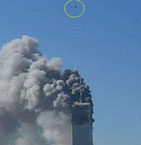 that anyone has yet got the imaginative measure of that terrifying day six years ago. Certainly our Tolstoy has not crawled out of the rubble. The closest we have, Don DeLillo, succeeded as an essayist-journalist ("In the Ruins of the Future: Reflections on Terror and Loss in the Shadow of September,” Harper’s, December 2001) but, to my mind, failed as a novelist ("Falling Man"). One reason, perhaps, is that the remembered emotion was instantly buried under a pile of cultural junk.' - Tod Gitlin in his review of Susan Faludi's The Terror Dream (written for