Stein's importance for them appears to lie in the following qualities of her work:
1. Although her work appears to be meaningless, it does have meaning; in fact, it seems to be an exploration of the very conditions for meaning.
2. Meaning is not forwarded as something existing out in the world but as an interaction between subject and object.
3. Her work appears to operate under the assumptions of the Saussurean conception of meaning as a function of a system of difference.
4. She does not write in order to enclose (define, delimit, decipher) the world but to move within it; in other words, she does not function according to the static determinism of the noun but through the process of relationship.
5. Her foregrounding of the material side of language (sound, rhythm, syntax) is a formal analogy of the process of perception--the "movement 'spreading' from transparency . . . to the implied darkness & opacity of blindness."
Tuesday, November 10, 2009
not to enclose, but to move within
I've made available a several-page excerpt from George Hartley's book on language poetry. This is the passage in which he outlines modernist influences: Dickinson, Stein, Ashbery, Williams, and Zukofsky. I chose a section that focuses particularly on Steinian and Ashberyian elements of the movement. On Stein:


 "I teach horizontally, meaning that while I might begin with a fixed idea of what I'm going to teach that day, I let it drift rhizomatically way off topic, often pulling it back when it gets too far. I rely on non-fixed materials to teach this way; the whole world is at my fingertips. Should I go off on a tangent about John and Rauschenberg and their love relationship as expressed in Rauschenberg's bed, an image of that bed is always a click away. From there, we can head anywhere into the non-fixed universe, be it film, text or sound. And of course, that always takes us elsewhere. As Cage says, 'We are getting nowhere fast.'"

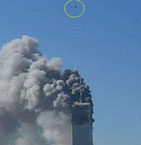 that anyone has yet got the imaginative measure of that terrifying day six years ago. Certainly our Tolstoy has not crawled out of the rubble. The closest we have, Don DeLillo, succeeded as an essayist-journalist ("In the Ruins of the Future: Reflections on Terror and Loss in the Shadow of September,” Harper’s, December 2001) but, to my mind, failed as a novelist ("Falling Man"). One reason, perhaps, is that the remembered emotion was instantly buried under a pile of cultural junk.' - Tod Gitlin in his review of Susan Faludi's The Terror Dream (written for