In 2002, during his visit to the Writers House, I interviewed novelist Michael Cunningham. Just today Jenny Lesser segmented the audio recording of that discussion into topics. You can listen to any of these segments, or all of them, by going here, and here is the list:
* introduction by Al Filreis (6:32)
* on the gap between the ideal and the actual creation (4:35)
* on youth, conventionality, creation and The Hours (3:43)
* on changing circumstances and Cunningham's Clarissa (4:38)
* on pacing ideas in writing (2:53)
* on first reading Virginia Woolf (7:18)
* on being defined as a gay writer (4:00)
* on writing from Virginia Woolf's point of view (3:55)
* on faith, doctors, and Virginia Woolf (6:34)
* on gay boyhoods and the numbness and separateness experienced by outsiders (7:10)
* on personal politics and becoming a character (5:15)
* on Golden States (5:50)
* who Cunningham thanks for The Hours (1:24)
* reading from At Home at the End of the World (3:26)
At some point during our conversation we talked about the making of the film version of The Hours. By the time of Cunningham's visit, the film was in process, or it had been made but not yet released. He spoke admiringly of the film's Clarissa--Meryl Streep--and talked about the thrill of having his own tiny role in the film (a friend Clarissa meets along a Greenwich Village street). Well, our favorite literary photographer, Lawrence Schwartzwald, was there at the moment, yes, and took the photo below of Cunningham and Streep. It was February 1, 2001, and the precise location was Bleecker and Charles.


 "I teach horizontally, meaning that while I might begin with a fixed idea of what I'm going to teach that day, I let it drift rhizomatically way off topic, often pulling it back when it gets too far. I rely on non-fixed materials to teach this way; the whole world is at my fingertips. Should I go off on a tangent about John and Rauschenberg and their love relationship as expressed in Rauschenberg's bed, an image of that bed is always a click away. From there, we can head anywhere into the non-fixed universe, be it film, text or sound. And of course, that always takes us elsewhere. As Cage says, 'We are getting nowhere fast.'"

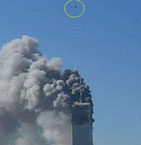 that anyone has yet got the imaginative measure of that terrifying day six years ago. Certainly our Tolstoy has not crawled out of the rubble. The closest we have, Don DeLillo, succeeded as an essayist-journalist ("In the Ruins of the Future: Reflections on Terror and Loss in the Shadow of September,” Harper’s, December 2001) but, to my mind, failed as a novelist ("Falling Man"). One reason, perhaps, is that the remembered emotion was instantly buried under a pile of cultural junk.' - Tod Gitlin in his review of Susan Faludi's The Terror Dream (written for