John Brockman with Warhol and Dylan on the day Dylan visited The Factory.
John Brockman's world in the 1960s was a humming electronic world, in which multiple films, tapes, amplifiers, kinetic sculpture, lights and live dancers or actors are combined to involve audiences in a total theater experience. His Intermedia Kinetic Experiences permitted audiences simply to sit, stand, walk or lie down and allow their senses to be Saturated by Media. His 1969 book was By the Late John Brockman.
Yes, Brockman, the sci/tech literary uber-agent, the Happenings organizer in the 1960s and in recent years the creator of "Third Culture" and a leader of the digerati (cyber-intellectuals), came to the Writers House in 1999 along with six of the digerati. And I introduced and, with John, co-moderated a discussion about digital culture.
 The digerati I met that night were: Maris Bowe of word.com; Jason McCabe Calacanis, a Silicon Alley Reporter; Luyen Chou of Learn Technologies; Steven Johnson of feed.com; Katinka Matson of EDGE; Frank Moretti of Columbia University's Center for New Media, Technology and Learning; Stefanie Syman of feed.com; Bob Stein of Night Kitchen. At left: John Brockman in '99.
See more:
[] the KWH calendar entry for this event: LINK
[] the KWH digerati page: LINK
[] Daily Pennsylvanian article covering the event: LINK
[] Wired exec ed Kevin Kelly's essay about Third Culture: LINK
[] an account of the day Dylan visited the Factory and Brockman was there: LINK


 "I teach horizontally, meaning that while I might begin with a fixed idea of what I'm going to teach that day, I let it drift rhizomatically way off topic, often pulling it back when it gets too far. I rely on non-fixed materials to teach this way; the whole world is at my fingertips. Should I go off on a tangent about John and Rauschenberg and their love relationship as expressed in Rauschenberg's bed, an image of that bed is always a click away. From there, we can head anywhere into the non-fixed universe, be it film, text or sound. And of course, that always takes us elsewhere. As Cage says, 'We are getting nowhere fast.'"

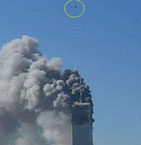 that anyone has yet got the imaginative measure of that terrifying day six years ago. Certainly our Tolstoy has not crawled out of the rubble. The closest we have, Don DeLillo, succeeded as an essayist-journalist ("In the Ruins of the Future: Reflections on Terror and Loss in the Shadow of September,” Harper’s, December 2001) but, to my mind, failed as a novelist ("Falling Man"). One reason, perhaps, is that the remembered emotion was instantly buried under a pile of cultural junk.' - Tod Gitlin in his review of Susan Faludi's The Terror Dream (written for