Where Lyndon Johnson spoke and wrote in phrases which could be hyphenated like Mayor Daley's temporary fences on the way to the Amphitheatre, making you keep your eye off the weeds in the vacant lot, and on the dual highway ahead, so Hubert Humphrey's phrases were like building plots in sub-developments, each little phrase was a sub-property - the only trouble was that the plots were all in different towns, little cliches from separate speeches made on unrelated topics in distinctly different years were no plumped down next to each other in the rag-bag map of his mind. He went on for many minutes planting shrubs in each separate little plot.... (p. 119)
And about the Yippie experience in Chicago:
Some went out forever, some went screaming down the alleys of the mad where cockroaches drive like Volkswagens on the oilcloth of the moon, gluttons found vertigo in centrifuges of consciousness, vomitoriums of ingestion; others found love, some manifest of love in light, in shards of Nirvana, sparks of satori.... (p. 135)


 "I teach horizontally, meaning that while I might begin with a fixed idea of what I'm going to teach that day, I let it drift rhizomatically way off topic, often pulling it back when it gets too far. I rely on non-fixed materials to teach this way; the whole world is at my fingertips. Should I go off on a tangent about John and Rauschenberg and their love relationship as expressed in Rauschenberg's bed, an image of that bed is always a click away. From there, we can head anywhere into the non-fixed universe, be it film, text or sound. And of course, that always takes us elsewhere. As Cage says, 'We are getting nowhere fast.'"

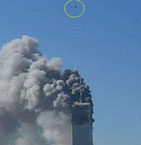 that anyone has yet got the imaginative measure of that terrifying day six years ago. Certainly our Tolstoy has not crawled out of the rubble. The closest we have, Don DeLillo, succeeded as an essayist-journalist ("In the Ruins of the Future: Reflections on Terror and Loss in the Shadow of September,” Harper’s, December 2001) but, to my mind, failed as a novelist ("Falling Man"). One reason, perhaps, is that the remembered emotion was instantly buried under a pile of cultural junk.' - Tod Gitlin in his review of Susan Faludi's The Terror Dream (written for