that "add[s] to the language, claiming for it a new richness," then it will be "politics as usual," and political poetry. Those are the choices. A synonymous binarism: wideness and depth on one hand, narrowness on the other. "The stumbling block for most political poetry is narrowness. As soon as poetry espouses an interest group [there it is, equation of political poetry with an "interest group," "single-issue politics" etc.], it ceases to speak to the widest audience and fails in its bid for universality." So, let's see where we are. We need an occasional poem, honoring a particular president in a particular national context (and of course one nation of many) yet it's also got to be universal. I suppose the great American poem can be considered universal. Right? To clinch the point, we are treated to (you guessed it) the post-communist Auden, he of post-9/11 fame: "Poetry is not concerned with telling people what to do." "Poetry, it turns out [diction trans.: in case you didn't know; duh!), is unwieldy stuff, intricately layered and resistant to bald sloganeering." Those last two words, in this newest brief against political poetry, cannot be separated. What if there's a sloganeering that is not "bald"? Are there no slogans that have as their "guiding spirits...beauty and truth"? Is there never, ever beauty and truth in "incitement and hectoring"? As for sloganeering, I suggest we all go back to Frost's "successful" inauguration poem. There was nothing here before we (immigrants from Europe) got here; the land was cultureless, without its own history, and we brought culture and history; what history and culture we make of the continent was always foreseen if currently unfinished. But now maybe here's a new leader to finish the job.
Thursday, January 15, 2009
once again, the case against political poetry
David Yezzi of the New Criterion opined on Obama's choice of Elizabeth Alexander to give the inaugural poem, in the Wall Street Journal, Friday, January 9, 2009. It's been linked variously. Most of what he says seems apt, reasonable and in fact obviously true about the situation and the choice. But at moments the tone and diction of the piece reveal what Yezzi's real concerns are: that Alexander is lefty-multicultural lite, that her inevitably bad inaugural poem will do further damage to the reputation of good nonpolitical poetry. And his tone discloses some joy in all this as proof yet again that political poetry (poetry that "tells you what to do") is ipso facto aesthetically bad. In the first 'graph E.A. is identified as an AfAm prof who "writes extensively about that academic trifecta -- race, class and gender." What's the diction of word choices that and trifecta? Her major concerns or topics of interest are.... But trifecta? Well that's a bet on a clean sweep, a gamble, a game; no truth and beauty within sight. If Alexander doesn't recite a poem that "add[s] to the language, claiming for it a new richness," then it will be "politics as usual," and political poetry. Those are the choices. A synonymous binarism: wideness and depth on one hand, narrowness on the other. "The stumbling block for most political poetry is narrowness. As soon as poetry espouses an interest group [there it is, equation of political poetry with an "interest group," "single-issue politics" etc.], it ceases to speak to the widest audience and fails in its bid for universality." So, let's see where we are. We need an occasional poem, honoring a particular president in a particular national context (and of course one nation of many) yet it's also got to be universal. I suppose the great American poem can be considered universal. Right? To clinch the point, we are treated to (you guessed it) the post-communist Auden, he of post-9/11 fame: "Poetry is not concerned with telling people what to do." "Poetry, it turns out [diction trans.: in case you didn't know; duh!), is unwieldy stuff, intricately layered and resistant to bald sloganeering." Those last two words, in this newest brief against political poetry, cannot be separated. What if there's a sloganeering that is not "bald"? Are there no slogans that have as their "guiding spirits...beauty and truth"? Is there never, ever beauty and truth in "incitement and hectoring"? As for sloganeering, I suggest we all go back to Frost's "successful" inauguration poem. There was nothing here before we (immigrants from Europe) got here; the land was cultureless, without its own history, and we brought culture and history; what history and culture we make of the continent was always foreseen if currently unfinished. But now maybe here's a new leader to finish the job.
that "add[s] to the language, claiming for it a new richness," then it will be "politics as usual," and political poetry. Those are the choices. A synonymous binarism: wideness and depth on one hand, narrowness on the other. "The stumbling block for most political poetry is narrowness. As soon as poetry espouses an interest group [there it is, equation of political poetry with an "interest group," "single-issue politics" etc.], it ceases to speak to the widest audience and fails in its bid for universality." So, let's see where we are. We need an occasional poem, honoring a particular president in a particular national context (and of course one nation of many) yet it's also got to be universal. I suppose the great American poem can be considered universal. Right? To clinch the point, we are treated to (you guessed it) the post-communist Auden, he of post-9/11 fame: "Poetry is not concerned with telling people what to do." "Poetry, it turns out [diction trans.: in case you didn't know; duh!), is unwieldy stuff, intricately layered and resistant to bald sloganeering." Those last two words, in this newest brief against political poetry, cannot be separated. What if there's a sloganeering that is not "bald"? Are there no slogans that have as their "guiding spirits...beauty and truth"? Is there never, ever beauty and truth in "incitement and hectoring"? As for sloganeering, I suggest we all go back to Frost's "successful" inauguration poem. There was nothing here before we (immigrants from Europe) got here; the land was cultureless, without its own history, and we brought culture and history; what history and culture we make of the continent was always foreseen if currently unfinished. But now maybe here's a new leader to finish the job.


 "I teach horizontally, meaning that while I might begin with a fixed idea of what I'm going to teach that day, I let it drift rhizomatically way off topic, often pulling it back when it gets too far. I rely on non-fixed materials to teach this way; the whole world is at my fingertips. Should I go off on a tangent about John and Rauschenberg and their love relationship as expressed in Rauschenberg's bed, an image of that bed is always a click away. From there, we can head anywhere into the non-fixed universe, be it film, text or sound. And of course, that always takes us elsewhere. As Cage says, 'We are getting nowhere fast.'"

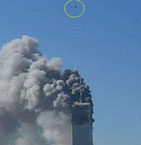 that anyone has yet got the imaginative measure of that terrifying day six years ago. Certainly our Tolstoy has not crawled out of the rubble. The closest we have, Don DeLillo, succeeded as an essayist-journalist ("In the Ruins of the Future: Reflections on Terror and Loss in the Shadow of September,” Harper’s, December 2001) but, to my mind, failed as a novelist ("Falling Man"). One reason, perhaps, is that the remembered emotion was instantly buried under a pile of cultural junk.' - Tod Gitlin in his review of Susan Faludi's The Terror Dream (written for