This is a little Depression story. (When I mentioned it to my teenaged kids this morning over breakfast, one of them asked, "Which depression?" Okay. It's January 2009, folks.)
Toward the beginning of the first era of big government ("The era of big government...has just begun!"), Eudora Welty was a fairly good but untried writer of short stories and a very fine and relatively experienced photographer. As a junior publicity agent for the Works Progress Administration (WPA - putting artists to work during a depression) she took some great pictures of the depressed Deep South but also of New York City.
But she wanted to write.
Given how hard it was to succeed as an artist generally, making the choice of short fiction over photography was counter-rational if not also counter-intuitive.
She wrote, although continued to love photography. But Welty was determined and tough. Later she left her camera on a bench in the Paris Metro and never replaced it - "never allowed herself to replace it." I've heard of determination for the sake of an artist's doing art, but this is such for the art of one medium over another. It's an impressive, although not necessarily hopeful, anecdote.
I'd heard the story before. But today it's also in Karen Rosenberg's alluring review of the show of Welty's documentary-style early '30s photos now at the Musem of the City of New York. In today's Times.


 "I teach horizontally, meaning that while I might begin with a fixed idea of what I'm going to teach that day, I let it drift rhizomatically way off topic, often pulling it back when it gets too far. I rely on non-fixed materials to teach this way; the whole world is at my fingertips. Should I go off on a tangent about John and Rauschenberg and their love relationship as expressed in Rauschenberg's bed, an image of that bed is always a click away. From there, we can head anywhere into the non-fixed universe, be it film, text or sound. And of course, that always takes us elsewhere. As Cage says, 'We are getting nowhere fast.'"

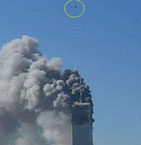 that anyone has yet got the imaginative measure of that terrifying day six years ago. Certainly our Tolstoy has not crawled out of the rubble. The closest we have, Don DeLillo, succeeded as an essayist-journalist ("In the Ruins of the Future: Reflections on Terror and Loss in the Shadow of September,” Harper’s, December 2001) but, to my mind, failed as a novelist ("Falling Man"). One reason, perhaps, is that the remembered emotion was instantly buried under a pile of cultural junk.' - Tod Gitlin in his review of Susan Faludi's The Terror Dream (written for