Does the ubiquity of recordings of poets reading their own poems change the way we teaching modern and contemporary poetics? On April 23, 2007, I had a good conversation with Steven Evans about this in my office at the Writers House. Here is a slightly edited recording of that conversation: this link takes you directly to a downloadable mp3 file. Steve's Lipstick of Noise site is subtitled "listening and linking to poetry audio files." I visit the site at least twice weekly.
Friday, July 06, 2007
discussion with Steve Evans about recorded poetry
Does the ubiquity of recordings of poets reading their own poems change the way we teaching modern and contemporary poetics? On April 23, 2007, I had a good conversation with Steven Evans about this in my office at the Writers House. Here is a slightly edited recording of that conversation: this link takes you directly to a downloadable mp3 file. Steve's Lipstick of Noise site is subtitled "listening and linking to poetry audio files." I visit the site at least twice weekly.


 "I teach horizontally, meaning that while I might begin with a fixed idea of what I'm going to teach that day, I let it drift rhizomatically way off topic, often pulling it back when it gets too far. I rely on non-fixed materials to teach this way; the whole world is at my fingertips. Should I go off on a tangent about John and Rauschenberg and their love relationship as expressed in Rauschenberg's bed, an image of that bed is always a click away. From there, we can head anywhere into the non-fixed universe, be it film, text or sound. And of course, that always takes us elsewhere. As Cage says, 'We are getting nowhere fast.'"

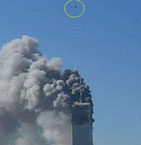 that anyone has yet got the imaginative measure of that terrifying day six years ago. Certainly our Tolstoy has not crawled out of the rubble. The closest we have, Don DeLillo, succeeded as an essayist-journalist ("In the Ruins of the Future: Reflections on Terror and Loss in the Shadow of September,” Harper’s, December 2001) but, to my mind, failed as a novelist ("Falling Man"). One reason, perhaps, is that the remembered emotion was instantly buried under a pile of cultural junk.' - Tod Gitlin in his review of Susan Faludi's The Terror Dream (written for