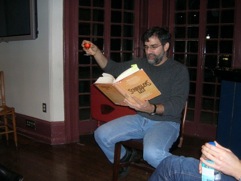
This afternoon I produced a new PENNsound podcast - the sixth in the series - that gives an overview of PENNsound, its mission and its pedagogical assumptions and implications. In discussing how students, teachers and readers can use PENNsound's materials, I use as an example Rae Armatrout's poem "The Way," about which I've written in an earlier entry here.
After we put up the Ezra Pound recordings, we got a raving fan note from poet Peter Gizzi (who has his own PENNsound author page), and here is what Peter wrote:
I LOVE, I mean LOVE that Pennsound has put up all the Pound material. I have it all in bootlegs and tapes of course but it is wonderful to have it there, finally, I mean it is THE MOST OUT there of anything on that site or ubu web! EP is the best. I used to listen to those tapes over and over in my car in the late 70’s when I was a teenager. To me it was Punk. And hearing it now it brings back summer and my youth! Listening to the Spoleto recording, maybe my fav for its restrained intensity, I am taken aback just how his late syntax has totally effected me. Liz and I were listening and we could hear my poem Homer’s Anger loud and clear for instance. Amazing. And Richard’s head note makes me want to listen further.
There's plenty more praise where that came from. I'm giddy about Gizzi and he has been mentioned here before.


 "I teach horizontally, meaning that while I might begin with a fixed idea of what I'm going to teach that day, I let it drift rhizomatically way off topic, often pulling it back when it gets too far. I rely on non-fixed materials to teach this way; the whole world is at my fingertips. Should I go off on a tangent about John and Rauschenberg and their love relationship as expressed in Rauschenberg's bed, an image of that bed is always a click away. From there, we can head anywhere into the non-fixed universe, be it film, text or sound. And of course, that always takes us elsewhere. As Cage says, 'We are getting nowhere fast.'"

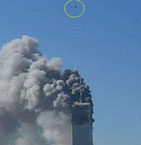 that anyone has yet got the imaginative measure of that terrifying day six years ago. Certainly our Tolstoy has not crawled out of the rubble. The closest we have, Don DeLillo, succeeded as an essayist-journalist ("In the Ruins of the Future: Reflections on Terror and Loss in the Shadow of September,” Harper’s, December 2001) but, to my mind, failed as a novelist ("Falling Man"). One reason, perhaps, is that the remembered emotion was instantly buried under a pile of cultural junk.' - Tod Gitlin in his review of Susan Faludi's The Terror Dream (written for